

Blog
OT Insights
Hi there! We’re so glad you’ve found your way to The Therapy Network’s blog. This is your go-to space for honest, practical, and heart-led insights into the world of paediatric occupational therapy. Whether you’re navigating meltdowns, messy mealtimes, tricky handwriting, or anything in between – you’re not alone, and you’re in the right place.
At The Therapy Network, our paediatric OTs are here to share tips, ideas, and stories that support your child’s development in ways that are fun, achievable, and rooted in connection. Let’s explore how we can help little ones grow, play, and shine – one small step at a time.

Crossing the Midline: The Hidden Skill That Helps Children Read, Write and Thrive
Have you ever noticed your child swapping hands while colouring, turning the whole page instead of moving their arm, or using one hand for almost every task? While these behaviours may seem insignificant, they can sometimes point to an important developmental skill that is still emerging—crossing the midline. Crossing the midline is one of the building blocks for handwriting, reading, sports, self-care, and coordinated movement. It allows both sides of the body—and the brain—to work together efficiently. When this skill develops well, children move more smoothly, learn more easily, and tackle everyday tasks with greater confidence. At The Therapy Network (TTN), Occupational Therapists regularly assess and support midline crossing as part of a child's overall motor development, helping children strengthen the foundations they need for learning, independence and participation.

When Small Problems Feel Huge: Helping Children Learn to Problem Solve Without Feeling Overwhelmed
Have you ever watched your child become completely overwhelmed by what seems like a small problem? A broken pencil, a missing toy, a change in routine, or getting the "wrong" coloured cup can sometimes lead to tears, frustration, or a complete shutdown. While these situations may seem minor to adults, they can feel enormous to children who are still developing executive functioning skills. In this blog, we explore why some children struggle to judge the size of everyday problems, how occupational therapists support problem-solving and flexible thinking, and practical ways families can help children develop the confidence to tackle life's challenges one step at a time.
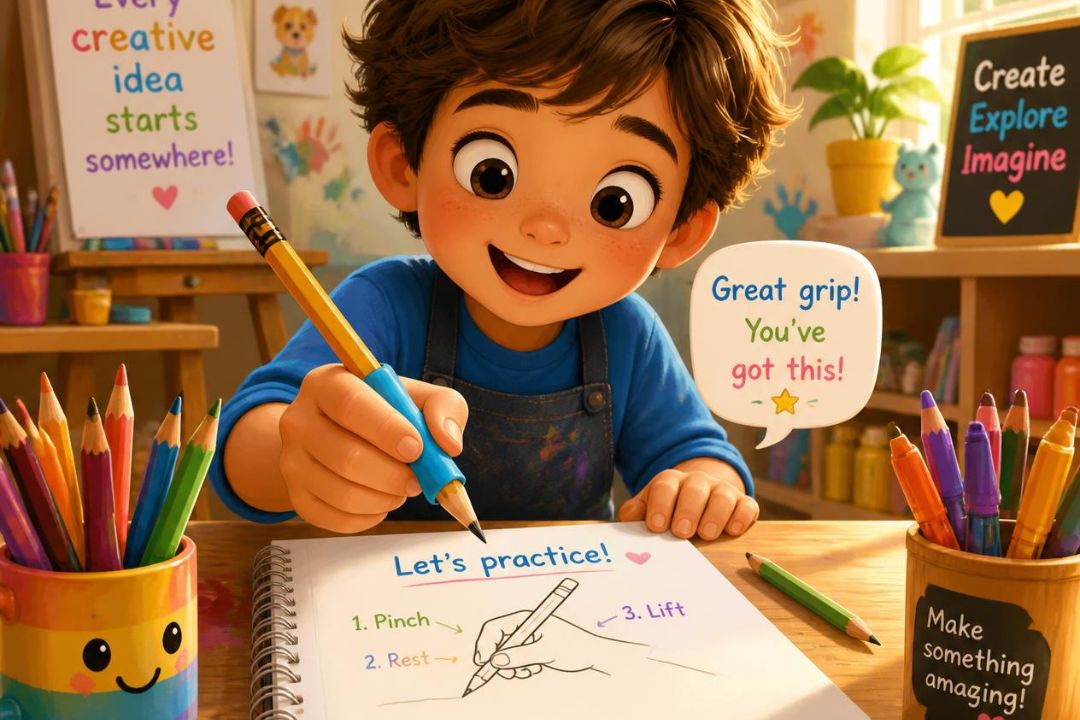
From Fists to Functional: Understanding Pencil Grasp Development in Children
Many parents worry when they notice their child holding a pencil differently from their peers. But did you know that pencil grasp develops gradually through a series of predictable stages? In this blog, our paediatric occupational therapists explain how pencil grasp evolves, what is considered typical at different ages, common misconceptions, and when it may be helpful to seek support. Learn how strength, coordination, posture, and play all contribute to successful handwriting.

From Crawling to Climbing: How Movement Builds Brains, Boosts Learning and Helps Children Thrive
Movement Is the Brain's Favourite Teacher Children don't learn best by sitting still. In fact, movement is one of the primary ways the developing brain organises itself during childhood. Each time a child moves, their brain receives information from multiple sensory systems at once. It learns where the body is in space, how much force to use, how to maintain balance, and how to coordinate different body [...]

The Brain’s Air Traffic Control: Understanding Executive Functioning in Children
Ever wonder why your child can spend hours building LEGO but forgets to pack their school bag? Or why they understand instructions but struggle to get started? Executive functioning skills are the brain's "management system"—helping children plan, organise, remember, regulate emotions, switch between tasks, and complete everyday activities. In this blog, The Therapy Network explains executive functioning in simple terms, explores how these skills develop, highlights common signs of executive functioning challenges, and explains how paediatric occupational therapists help children build independence, confidence, and success at home, school, and in the community.

One Step at a Time: Helping Children Tackle Big Tasks Without Feeling Overwhelmed
Have you ever asked your child to clean their room, complete their homework, or get ready for school, only to be met with tears, frustration or complete shutdown? For many children, adolescents and young adults, the challenge isn't the task itself—it's that the brain sees too many steps at once. Breaking large tasks into smaller, manageable steps reduces cognitive load, making it easier to get started, stay organised and experience success. In this blog, our occupational therapists explain why this strategy works and how families can use simple visual and practical supports to build confidence and independence.