
Therapy Network
Therapy Network

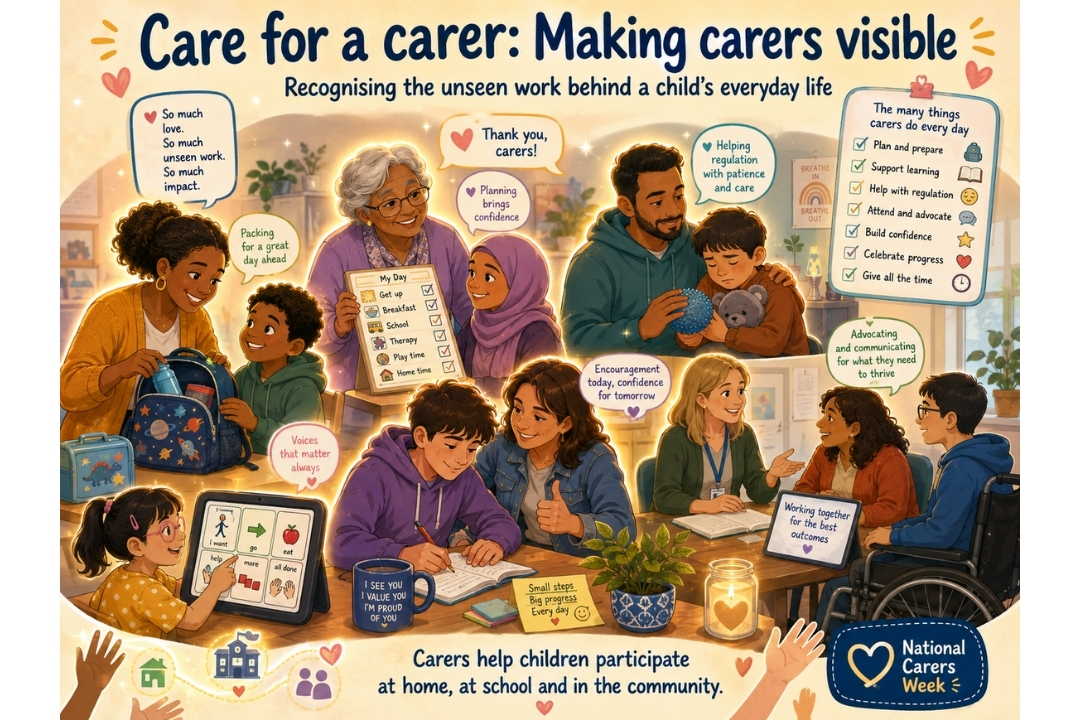
The Hands Behind Everyday Life: Celebrating the Carers Who Make Participation Possible

Behind many of the everyday achievements we celebrate in paediatric Occupational Therapy is a carer providing encouragement, advocacy, organisation, reassurance and countless hours of support. This National Carers Week, 11–17 October, the Occupational Therapists at The Therapy Network recognise the parents, grandparents, siblings, relatives and other carers whose often unseen work helps children and young people participate in everyday life.

News|Comments Off on The Hands Behind Everyday Life: Celebrating the Carers Who Make Participation Possible

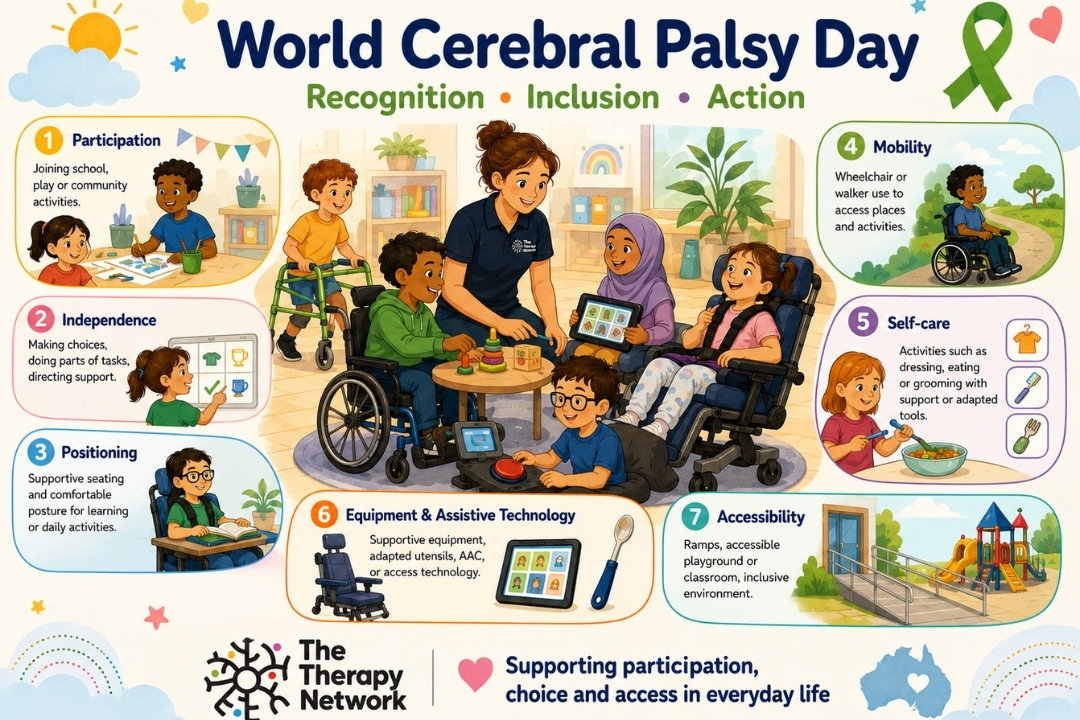
Access Changes Everything: Participation, Possibility and World Cerebral Palsy Day

This World Cerebral Palsy Day, The Therapy Network is recognising the children, young people, adults and families who are part of the cerebral palsy community. From mobility and positioning to self-care, assistive technology and environmental accessibility, Occupational Therapy can help identify and reduce barriers to participation. Because inclusion is not about expecting everyone to do things the same way — it is about creating opportunities for every person to participate in the ways that work for them.

Daily Living Skills, News|Comments Off on Access Changes Everything: Participation, Possibility and World Cerebral Palsy Day

Wiggles, Wobbles and Wondering Why: Understanding Movement Needs in the Classroom

Does your child constantly fidget, rock on their chair, swing their legs, or find it impossible to sit still during class? While these behaviours are often mistaken for poor attention or disruptive behaviour, they may actually be a child's way of helping their brain stay alert and regulated. In this blog, The Therapy Network (TTN) explains why movement is essential for learning, how occupational therapists understand movement needs, and practical strategies to help children succeed in the classroom without expecting them to remain perfectly still.

News, School Readiness, Sensory Processing|Comments Off on Wiggles, Wobbles and Wondering Why: Understanding Movement Needs in the Classroom

When Research Changes the Way You See a Child: Reflections from an Occupational Therapist on Sensory Processing and Autism

As occupational therapists, we are constantly learning from the children and families we work with—but sometimes a research paper makes us stop and reflect on our own practice. A recently published article, Sensory-Processing Informed Autism Practice for Child-Centred Therapists (Daniel et al., 2026), challenged many traditional assumptions about autism, sensory processing and emotional regulation. In this reflection, TTN's occupational therapists share the key messages that resonated most, what they mean for families, and how they as a team continue to shape our child-centred approach to therapy.

News, Sensory Processing|Comments Off on When Research Changes the Way You See a Child: Reflections from an Occupational Therapist on Sensory Processing and Autism

Power Up Those Little Hands: Building Strength Through Play (No Worksheets Needed!)

When people think about developing hand strength, they often picture endless handwriting practice or repetitive exercises. The good news is that children build stronger hands best through play. Every time they squeeze, pinch, pull, twist, climb, build, or create, they're strengthening the muscles needed for writing, dressing, eating, and becoming more independent. At The Therapy Network (TTN), we believe that the best therapy often looks like play. Our Occupational Therapists help children build strong, capable hands through fun, meaningful activities that fit naturally into everyday family life.

Daily Living Skills, Fine and Gross Motor Skills, School Readiness|Comments Off on Power Up Those Little Hands: Building Strength Through Play (No Worksheets Needed!)

Beyond the Scores: How the ABAS Helps Us Understand Your Child’s Everyday Life

When families hear the word assessment, it's easy to imagine tests, scores and comparisons. But the Adaptive Behaviour Assessment System (ABAS) is very different. Rather than measuring intelligence or academic achievement, it helps Occupational Therapists understand how children manage the everyday skills that support independence, participation and quality of life. From getting dressed and communicating with others to following routines and participating in the community, the ABAS provides valuable insights into what life looks like beyond the clinic. At The Therapy Network (TTN), we use the ABAS as part of comprehensive Functional Capacity Assessments (FCAs) to better understand each child's strengths, identify areas where support may be needed, and develop meaningful recommendations that help children thrive at home, school and in the community.

Daily Living Skills, Emotional Regulation, Executive Functioning, Fine and Gross Motor Skills, News, Sensory Processing|Comments Off on Beyond the Scores: How the ABAS Helps Us Understand Your Child’s Everyday Life

Tiny Backpack, Big Milestone: An OT’s Perspective on Starting Childcare

Starting childcare is one of the first major transitions in a young child's life—and often one of the most emotional for parents too. In this month's OT Insight, Rebecca shares her personal experience as her son Tommy began childcare and reflects on the practical preparations, emotional challenges, and incredible developmental opportunities this milestone brings. Plus, we've included a practical Childcare Transition Checklist and occupational therapy tips to help your family feel prepared and supported through this exciting new chapter.

Daily Living Skills, Feeding & Mealtimes, News|Comments Off on Tiny Backpack, Big Milestone: An OT’s Perspective on Starting Childcare

Ready, Set, Go! Is Your Child Ready for Toilet Training? A Gentle Guide for Families

Toilet training is one of the biggest milestones of early childhood—but success isn't determined by age alone. True readiness involves physical development, body awareness, communication, sensory processing, and emotional confidence. In this blog, we explore the signs that your child may be ready to begin their toileting journey, share practical Occupational Therapy strategies to make the process positive and stress-free, and explain when it may be helpful to seek additional support. Discover how following your child's lead can build confidence, independence, and long-term success.

Daily Living Skills, Emotional Regulation, Sensory Processing|Comments Off on Ready, Set, Go! Is Your Child Ready for Toilet Training? A Gentle Guide for Families

Click, Connect, Thrive: Your Guide to Stress-Free Telehealth for Kids

Telehealth has made paediatric occupational therapy more accessible than ever—but a smooth, secure session doesn’t happen by accident. This parent-friendly guide shares simple, practical tips to help you set up, prepare, and support your child before, during, and after their telehealth sessions—so they can stay engaged, make progress, and feel confident learning from home.

Daily Living Skills, Executive Functioning, News, School Readiness|Comments Off on Click, Connect, Thrive: Your Guide to Stress-Free Telehealth for Kids

Grip, Strength, and Success: Preparing Your Child for Writing

Learning to write is more than holding a pencil—it requires the right hand strength, coordination, and fine motor control. This blog explains the connection between pencil grip, hand strength, and writing readiness, and provides practical tips for parents to support their child’s early writing skills. It also highlights how occupational therapists at The Therapy Network (TTN) guide families in developing the foundational skills needed for confident, independent handwriting.

Fine and Gross Motor Skills, News, School Readiness|Comments Off on Grip, Strength, and Success: Preparing Your Child for Writing
Go to Top