Caring for the Carers: Recognising the Invisible Work Behind a Child’s Everyday Life
As Occupational Therapists, we spend a lot of time talking about participation.
We celebrate when a child learns to dress themselves, joins a playground game, tries a new food, manages the school morning more independently, communicates that they need a break or develops the confidence to participate in their community.
But behind many of these moments is someone else.
Someone who packed the bag.
Remembered the appointment.
Prepared the visual schedule.
Practised the new routine.
Explained the child’s needs to another person.
Packed the sensory supports.
Made the phone call.
Completed the paperwork.
Changed the plan when the first plan did not work.
Encouraged one more attempt.
And sometimes simply sat beside a child through a difficult moment.
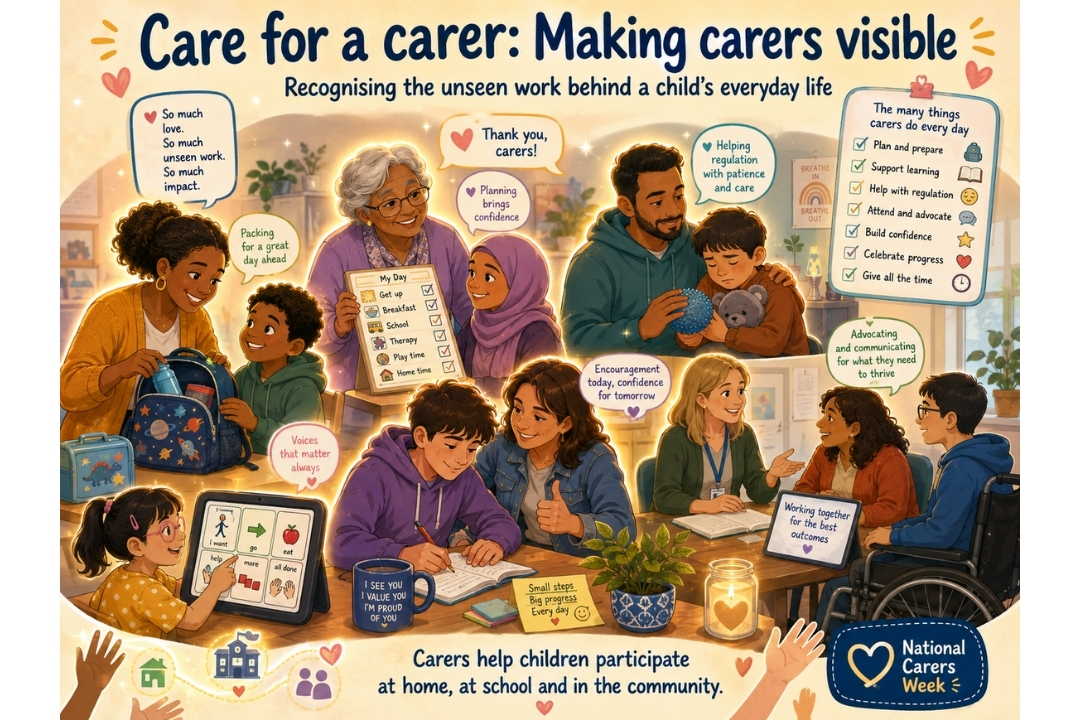
This National Carers Week, the team at The Therapy Network (TTN) wants to recognise that work.
The Work We Don’t Always See
Caring for a child or young person with additional support needs can involve an enormous amount of work that happens quietly in the background.
There is the practical work — appointments, school communication, transport, equipment, meals, medication, paperwork, funding, routines and schedules.
There is also the thinking work.
Remembering what needs to happen next. Anticipating situations that may be difficult. Planning around sensory needs. Keeping track of recommendations from different professionals. Preparing a child for a change in routine. Working out whether today is a day to encourage another step towards independence or a day when more support is needed.
Then there is the emotional work.
Co-regulating through difficult moments. Providing reassurance. Advocating when a child’s needs are misunderstood. Celebrating progress that others may not notice. Adjusting expectations. Supporting siblings and other family members while trying to meet your own needs as well.
Much of this work may be invisible to the outside world.
As OTs, however, we know how important it can be to a child’s everyday participation.
Carers Are an Important Part of the Team
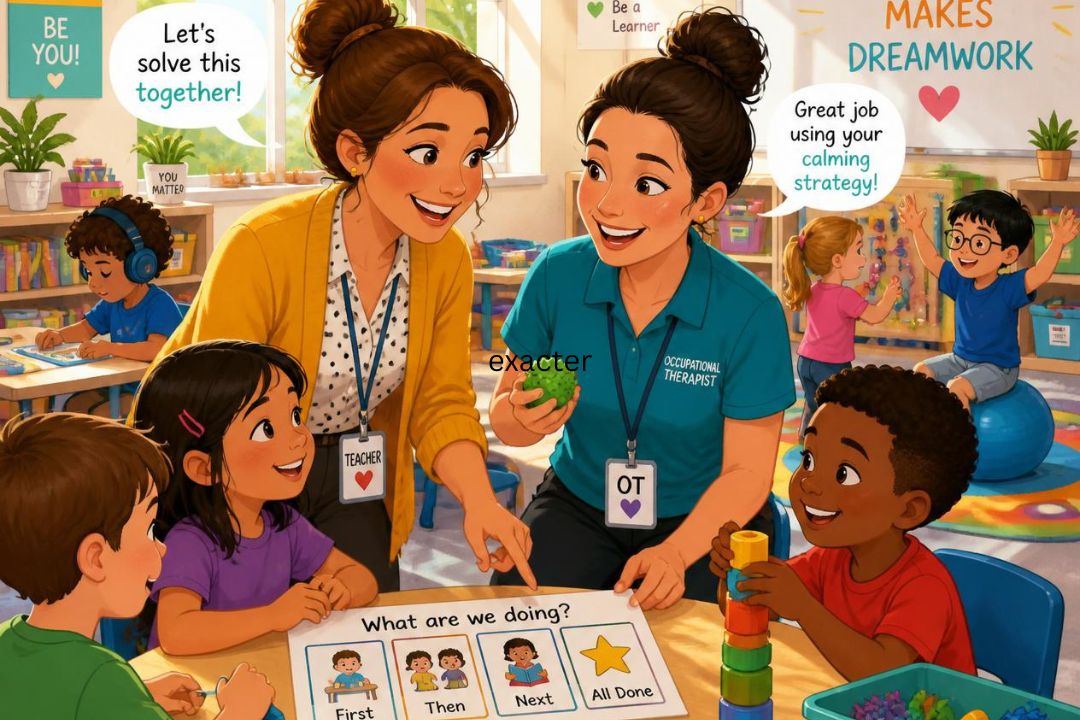
At TTN, we believe effective paediatric therapy is collaborative.
Our therapists bring clinical knowledge and an Occupational Therapy perspective, but carers bring something equally important: an understanding of the child within their real, everyday life.
Families often know:
- what makes their child laugh
- what situations are likely to overwhelm them
- which strategies have already been tried
- what mornings actually look like at home
- which environments are particularly challenging
- what motivates their child
- what their child values
- where family routines are working well
- where additional support would make the greatest difference.
That knowledge matters.
A strategy that works beautifully in a therapy room but cannot realistically fit into family life is unlikely to be the right strategy.
Our role as OTs is not simply to give families another list of things they “should” be doing. It is to listen, collaborate and find approaches that are meaningful, achievable and appropriate for that particular child and family.
You Don’t Have to Become Your Child’s Therapist
This is an important distinction.
Parents and carers play an invaluable role in supporting children, but they should not feel that every interaction needs to become therapy.
Home should still be home.
Play can simply be play.
A trip to the park does not always need a therapeutic objective.
And families do not need to implement every strategy perfectly for therapy to be effective.
Part of good Occupational Therapy is considering the capacity of the whole family. Sometimes the most useful recommendation is the simplest one. Sometimes we need to adapt an existing routine rather than add another task to an already busy day.
Supporting the child also means respecting the people who support them.
The Small Things Are Often Big Things
One of the privileges of working with children and families is seeing just how much effort can sit behind an achievement that may appear small to someone else.
Putting on one sock independently.
Walking through the school gate.
Trying a different texture of food.
Remembering to pack one item without being prompted.
Joining a group activity for five minutes.
Using words, gestures or AAC to say, “I need a break.”
Going somewhere new.
Completing part of a morning routine.
As OTs, we understand that these moments may represent weeks or months of repetition, adjustment, patience and encouragement.
When we celebrate a child’s progress, we also recognise the carers who helped create the opportunities for that progress to happen.
Caring for Carers Matters Too
National Carers Week is also an important reminder that carers have their own occupations, identities, relationships, responsibilities and needs.
Caring responsibilities can exist alongside employment, study, parenting, relationships, friendships, household responsibilities and the ordinary demands of everyday life.
Carer wellbeing matters in its own right.
From an OT perspective, we often talk about finding a sustainable balance between the things we need to do, want to do and have to do. That principle applies to carers too.
Support might look different for every family. It could mean accepting practical assistance, sharing responsibilities, accessing respite or formal supports, protecting time for meaningful activities, connecting with other carers or simply recognising that not everything has to happen today.
Asking what would make daily life more manageable is not separate from supporting the child.
It can be part of supporting the whole family.
Making Carers Visible
The 2026 National Carers Week theme, “Care for a carer: Making carers visible,” encourages us to notice and acknowledge the contribution carers make every day.
At TTN, we think that recognition begins with listening.
Listening when a parent says a strategy is not practical at home.
Listening when a family tells us mornings are becoming overwhelming.
Listening when a carer identifies a goal that would make everyday life easier.
Listening to what is working — not only what is difficult.
And recognising that families are not simply implementing therapy recommendations. They are living full and complex lives alongside the children and young people they support.
From Our OTs at TTN: Thank You
This National Carers Week, the Occupational Therapists at The Therapy Network would like to acknowledge the carers within our TTN community.
To the people coordinating appointments, communicating with schools, advocating, encouraging independence, adapting routines, helping children regulate, managing difficult days and celebrating the good ones — your contribution matters.
We notice the preparation behind the participation.
We recognise the patience behind the progress.
And we value the knowledge, insight and experience you bring to our work together.
Because supporting a child’s participation is rarely the work of one person.
It takes collaboration, relationships and a team of people who believe in that child.
And carers are an incredibly important part of that team.