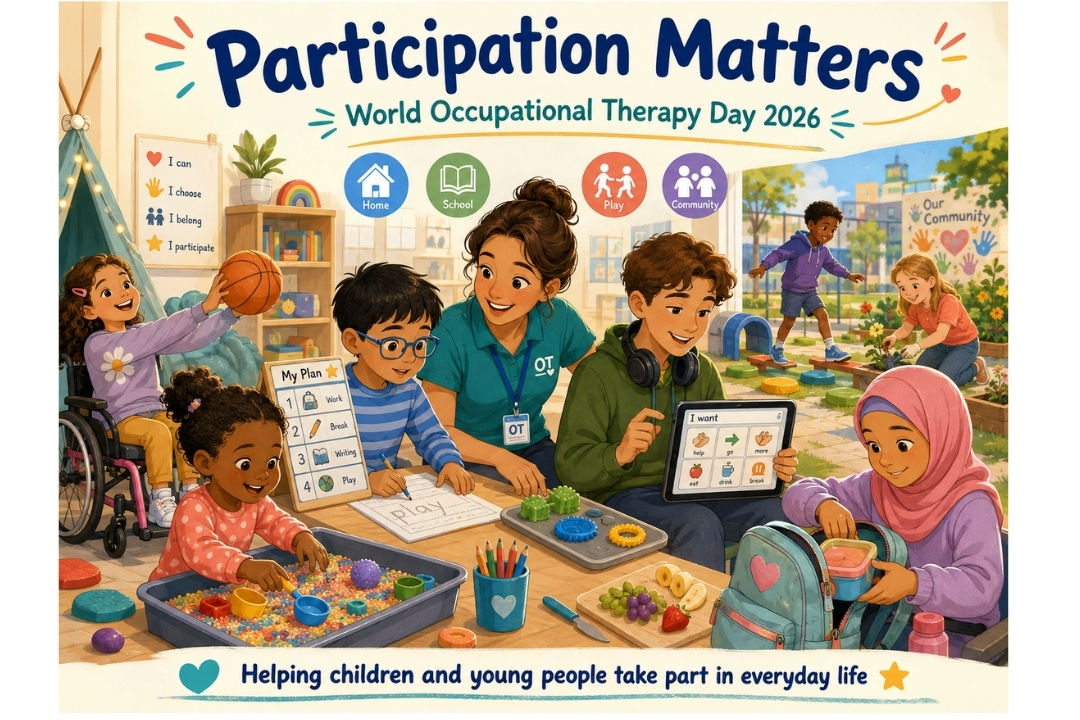
Participation Matters
Participation Matters
Every year, World Occupational Therapy Day gives us an opportunity to reflect on what Occupational Therapy really means.
The 2026 theme, “Participation Matters,” is especially meaningful in paediatric practice because participation sits at the centre of so much of what we do.
For a child, participation may look like:
- getting dressed in the morning
- joining a game in the playground
- sitting with classmates during group time
- brushing their teeth
- completing schoolwork
- attending a birthday party
- using public transport
- helping prepare a meal
- joining a sports team
- spending time with friends
- making choices about their own day.
These everyday moments can seem simple, but for some children and young people they can involve significant physical, sensory, emotional, cognitive or social demands.
At The Therapy Network (TTN), our Occupational Therapists are interested not only in what a child can do, but in whether they can use their skills in the places and situations that matter to them.
Participation Is More Than Independence
Participation does not always mean doing something completely alone.
A child can participate successfully while using:
- a visual schedule
- a communication device
- adapted equipment
- sensory supports
- prompts
- extra processing time
- physical assistance
- support from another person.
True participation is about having meaningful involvement, choice and opportunity.
For one child, success may mean independently tying their shoelaces. For another, it may mean directing an adult to help with dressing. For another, it may mean tolerating being present in a busy classroom for longer periods.
The goal is not to make every child complete tasks in the same way.
The goal is to help each child participate in a way that works for them.
Looking Beyond the Child
When a child is finding an activity difficult, it can be tempting to focus only on the skill they appear to be missing.
Occupational Therapists look more broadly.
We consider the relationship between:
The child – their strengths, sensory preferences, motor skills, executive functioning, communication and regulation.
The activity – what the task requires and whether it can be broken down, adapted or approached differently.
The environment – whether noise, lighting, expectations, physical setup, social demands or time pressures are creating barriers.
Sometimes progress comes from helping the child build a new skill.
Other times, it comes from changing the task or environment so the child can participate more successfully.
Participation at School
For school-aged children, participation is much broader than handwriting or sitting at a desk.
It includes being able to:
- manage classroom routines
- organise belongings
- move between activities
- cope with sensory demands
- follow multi-step instructions
- join peer activities
- ask for help
- participate in sport and play
- manage emotions during challenging tasks
- recover when plans change.
A child may have the academic ability to complete their work but still find the everyday demands of school exhausting.
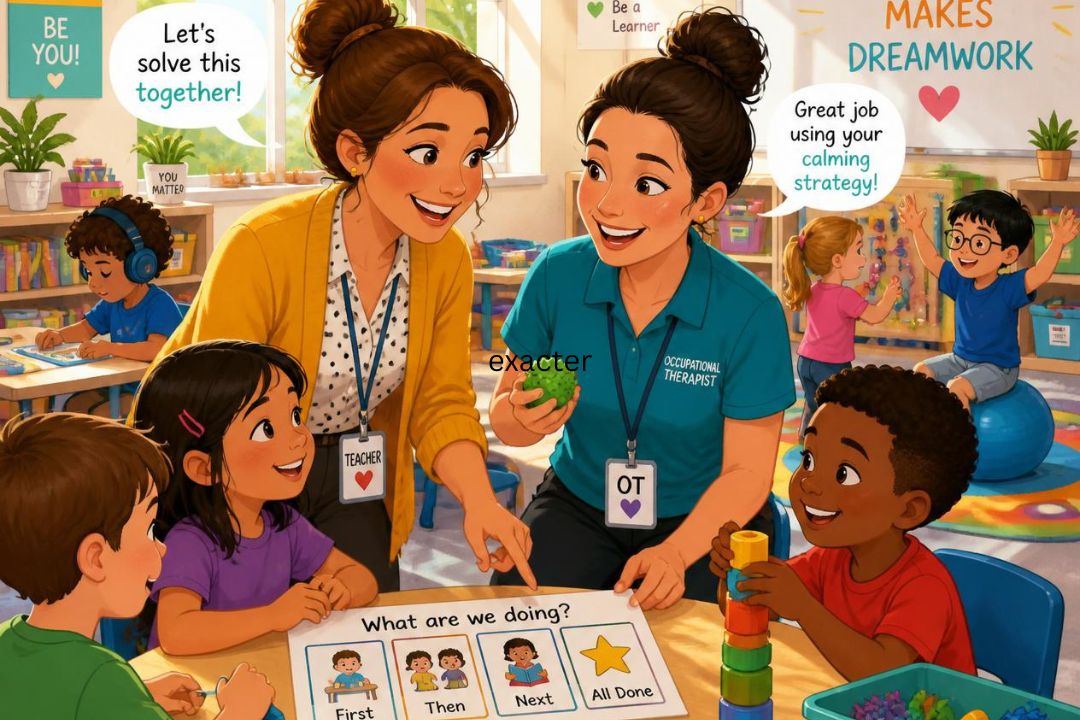
OT can help identify where the barriers are and work collaboratively with families and educators to build practical supports around the child.
Participation at Home
Home is another important place where participation develops.
Daily routines such as dressing, bathing, eating, completing chores, preparing for school and getting ready for bed all provide opportunities to develop independence and confidence.
These routines can also be challenging.
An OT may help families explore:
- why a particular routine is difficult
- whether sensory factors are involved
- whether the task contains too many steps
- whether visual supports may help
- whether equipment could increase independence
- how the environment could be changed
- how much assistance is appropriate.
Small changes can sometimes make a significant difference to how successfully a child participates in everyday family life.
Participation in Play and Friendships
Play is one of the most important occupations of childhood.
Through play, children develop movement skills, communication, problem-solving, imagination, emotional regulation and social connection.
Participation in play may mean:
- joining a group
- taking turns
- negotiating rules
- tolerating losing
- trying something unfamiliar
- communicating ideas
- staying regulated in a busy playground
- recognising when a break is needed.
OT support can help children develop the skills and strategies they need to participate in play in ways that feel safe and meaningful.
Growing Participation Across the Years
Participation changes as children grow.
The skills needed by a preschooler are different from those needed by a teenager preparing for secondary school, work experience, further education or greater independence in the community.
For teenagers and young adults, participation may include:
- managing a timetable
- preparing meals
- using money
- travelling independently
- completing household tasks
- managing appointments
- advocating for support
- participating in work or further education
- maintaining friendships and social connections.
Occupational Therapy can help young people build these skills gradually while also identifying the supports they may continue to need.
Choice Is Part of Participation
Participation is not simply about being present.
Children and young people should also have opportunities to make choices about activities, routines and goals that affect them.
This might mean choosing:
- what activity they want to work on
- which strategy feels most helpful
- how they want to complete a task
- when they need a break
- what equipment they prefer
- which goals feel most meaningful.
When children are included in decisions, therapy can become more relevant and motivating.
Why Participation Matters at TTN
At The Therapy Network, we believe therapy should connect back to real life.
Building strength is important when it helps a child climb onto playground equipment.
Developing fine motor skills matters when it helps them open their lunchbox.
Improving executive functioning matters when it helps a teenager organise their school bag or get to class on time.
Supporting emotional regulation matters when it helps a child stay involved in an activity that is important to them.
The skill is valuable because of what it allows the child to do.
That is why participation matters.
This World Occupational Therapy Day, we are celebrating the many different ways children and young people participate in their homes, schools and communities.
Because Occupational Therapy is not simply about helping children do more.
It is about helping them take part in the moments, relationships and occupations that make up everyday life.