

Sensory Experiences and Emotional Wellbeing
Imagine trying to concentrate while a fire alarm is sounding, someone is brushing against your skin and the lights above you are flickering.
For some children, everyday environments can feel just as intense.
The classroom may feel unbearably noisy. The seams in a school uniform may feel painful. The movement of a crowded playground may feel unpredictable. A strong food smell may make it difficult to remain at the table.
Other children may experience the opposite. They may need more movement, touch or physical input to feel alert, settled and ready to participate.
At The Therapy Network (TTN), our occupational therapists understand that sensory needs can influence much more than a child’s response to sound, touch or movement. Sensory experiences can also affect emotions, behaviour, confidence, relationships and participation in everyday activities.
What Is Sensory Processing?
Sensory processing is the way the brain receives, organises and responds to information from the body and the surrounding environment.
We constantly receive sensory information through systems including:
- sight
- sound
- touch
- taste
- smell
- balance and movement
- body awareness
- internal body signals
The brain uses this information to help us understand what is happening, decide what is important and respond appropriately.
For many people, this process happens automatically.
For some children, sensory information may be experienced more intensely, noticed less readily or processed inconsistently. This can make everyday activities feel confusing, uncomfortable or exhausting.
How Sensory Needs Can Influence Emotions
Sensory input can affect the nervous system and influence whether a child feels calm, alert, overwhelmed or disconnected.
When a sensory experience feels too intense, unpredictable or difficult to process, a child may experience:
- anxiety
- frustration
- irritability
- fear
- distress
- anger
- embarrassment
- exhaustion
- helplessness
- a strong need to escape
When a child is not receiving enough of the sensory input their body needs, they may feel:
- restless
- unsettled
- distracted
- sluggish
- disconnected
- unable to concentrate
- driven to move, touch or make noise
These responses are not always deliberate choices. They may reflect the child’s nervous system trying to manage the sensory information around them.
Sensory Overload: When Everything Feels Too Much
Sensory overload occurs when the brain receives more sensory information than it can comfortably process.
A child experiencing sensory overload may:
- cover their ears
- close their eyes
- hide under furniture
- run away
- cry or yell
- become physically distressed
- refuse to enter a space
- push others away
- appear angry or oppositional
- become very quiet
- stop responding
- have difficulty following instructions
The emotional response may appear sudden, but the child may have been managing discomfort for some time before reaching their limit.
A busy shopping centre, school assembly, birthday party or noisy classroom may involve multiple sensory demands at once. The child may be processing voices, music, movement, touch, smells, bright lights and social expectations simultaneously.
Eventually, their nervous system may become overwhelmed.
Sensory Seeking: When the Body Needs More Input
Some children actively seek sensory input to help their bodies feel organised and alert.
They may:
- move constantly
- jump, crash or spin
- chew clothing or objects
- touch people or items frequently
- make repetitive sounds
- seek tight hugs or pressure
- climb furniture
- play roughly
- enjoy strong flavours
- have difficulty sitting still
These behaviours may sometimes be mistaken for intentional disruption or poor listening.
However, the child may be seeking movement, pressure or other sensory input because it helps them feel more regulated.
When their sensory needs are not met, they may become frustrated, restless or emotionally distressed.
Sensory Avoidance: When Everyday Experiences Feel Uncomfortable
Children who are highly sensitive to sensory input may avoid situations that feel uncomfortable or unpredictable.
They may refuse to:
- wear certain clothes
- brush their hair or teeth
- eat particular foods
- enter noisy rooms
- participate in messy play
- use public toilets
- attend parties or assemblies
- stand in crowded lines
- join playground activities
Avoidance is not always defiance.
The child may be trying to protect themselves from an experience that feels painful, frightening or overwhelming.
For example, a child who refuses to wear socks may not be trying to delay the morning routine. The seam may feel extremely uncomfortable against their toes.
A child who avoids the school bathroom may be distressed by loud hand dryers, strong smells or unpredictable flushing sounds.
Understanding the sensory reason behind the response helps adults provide more effective support.
The Sensory and Emotional “Iceberg”
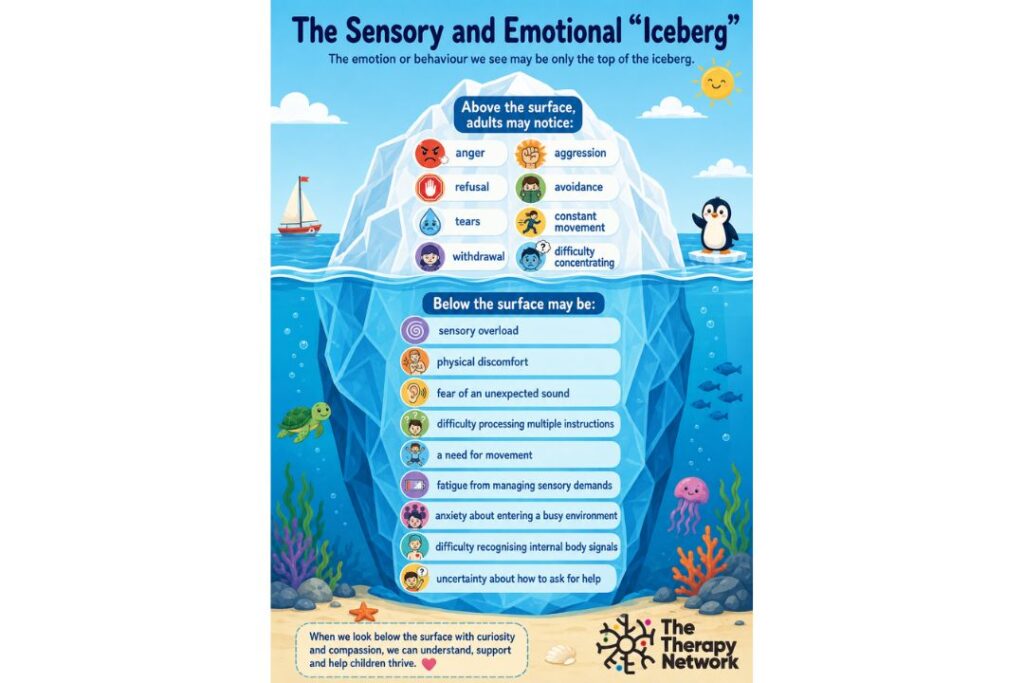
The emotion or behaviour we see may be only the top of the iceberg.
Above the surface, adults may notice:
- anger
- refusal
- tears
- withdrawal
- aggression
- avoidance
- constant movement
- difficulty concentrating
Below the surface may be:
- sensory overload
- physical discomfort
- fear of an unexpected sound
- difficulty processing multiple instructions
- a need for movement
- fatigue from managing sensory demands
- anxiety about entering a busy environment
- difficulty recognising internal body signals
- uncertainty about how to ask for help
Looking below the surface allows adults to respond to the child’s needs rather than focusing only on the visible reaction.
Sensory Needs Can Change Throughout the Day
A child’s ability to manage sensory information is not always consistent.
Their tolerance may change depending on:
- sleep
- hunger
- illness
- emotional stress
- changes to routine
- the number of demands placed on them
- how busy the environment is
- how much sensory input they have already managed
- whether they feel safe and supported
A child may cope well with classroom noise in the morning but become overwhelmed later in the day.
They may participate successfully at school and then become distressed when they arrive home.
This is sometimes described as holding things together throughout the day and releasing emotions in a safe environment.
The reaction at home may not be caused by one small request. It may reflect the accumulated sensory and emotional demands of the entire day.
Internal Body Signals and Emotions
Sensory processing also includes interoception, which is the ability to notice signals from inside the body.
These signals may include:
- hunger
- thirst
- tiredness
- pain
- needing the toilet
- a racing heart
- tight muscles
- changes in breathing
- feeling hot or cold
Interoception helps children recognise emotions because feelings often involve physical changes in the body.
A child who has difficulty noticing these signals may not recognise that they are becoming anxious, hungry or overwhelmed until the feeling is very intense.
They may suddenly become distressed without being able to explain why.
Occupational therapists can help children develop greater awareness of body signals and connect these sensations with emotions and needs.
Why Sensory Distress Can Look Like Behaviour
Sensory discomfort is not always visible to other people.
Adults may see a child who is:
- refusing to participate
- not listening
- interrupting
- leaving the room
- pushing others
- becoming upset over something small
- unable to sit still
- avoiding particular activities
The child may be communicating:
“This is too loud.”
“My body needs to move.”
“That texture feels painful.”
“There are too many things happening.”
“I cannot concentrate in this environment.”
“I do not know how to explain what I need.”
Behaviour may be the child’s most available way of communicating sensory distress.
How Adults Can Respond
Notice Patterns
Consider when and where emotional reactions occur.
Ask:
- What happened immediately beforehand?
- Was the environment noisy, bright, crowded or unpredictable?
- Was the child required to sit still for a long time?
- Did someone touch them unexpectedly?
- Was there a strong smell or unfamiliar food?
- Had they already managed a demanding day?
- What helped them recover?
Patterns can help identify sensory triggers and unmet needs.
Reduce Demands During Overload
When a child is overwhelmed, they may find it difficult to process language, answer questions or solve problems.
Adults can help by:
- speaking calmly
- using fewer words
- reducing unnecessary demands
- offering physical space
- moving to a quieter area
- lowering noise or lighting when possible
- allowing time to recover
- avoiding lengthy explanations in the moment
The priority is helping the child feel safe and regulated.
Provide Predictability
Knowing what to expect can reduce both sensory and emotional stress.
Helpful supports may include:
- visual schedules
- countdowns
- warnings before loud sounds
- photos of unfamiliar places
- clear routines
- preparation for changes
- planned access to breaks
Predictability helps children feel more in control of their environment.
Offer Sensory Support Proactively
Sensory strategies are often most effective when offered before the child becomes overwhelmed.
Depending on the individual child, this may include:
- movement breaks
- pushing, pulling or carrying activities
- access to a quiet space
- headphones or hearing protection
- fidget tools
- flexible seating
- deep-pressure activities
- reduced visual clutter
- comfortable clothing options
- planned breaks from busy environments
Sensory strategies should be individualised. A tool that is calming for one child may be uncomfortable or alerting for another.
How TTN Occupational Therapists Can Help
Our Occupational therapists consider how sensory processing affects a child’s emotions, behaviour and ability to participate in meaningful activities.
As occupational therapist we may:
- gather information from the child, family and educators
- observe the child in different environments
- identify sensory preferences and patterns
- explore how sensory needs affect daily routines
- help the child recognise body signals
- develop individualised regulation strategies
- recommend environmental adjustments
- support transitions and participation
- help adults understand the meaning behind behaviour
- work collaboratively with families and schools
The goal is not to remove every sensory challenge or expect the child to tolerate overwhelming experiences.
The goal is to understand the child’s needs, reduce unnecessary barriers and build the skills and supports that help them participate safely and confidently.
Sensory Support Is About More Than Calming Down
Sensory strategies should not only be used to make a child appear calm or compliant.
A child may sit quietly while still feeling uncomfortable or overwhelmed.
Effective sensory support focuses on how the child feels and whether they are able to participate meaningfully.
This may mean helping a child:
- remain in the classroom without becoming overwhelmed
- join family mealtimes
- tolerate hair care
- attend a community activity
- play alongside peers
- manage transitions
- communicate when they need a break
- recover after a difficult sensory experience
- feel more confident in their body
Supporting the Child, Not Just the Reaction
A child’s emotional response often makes more sense when we understand their sensory experience.
The noise may genuinely feel too loud. The clothing may genuinely feel painful. Their body may genuinely need movement before they can concentrate.
When adults respond with curiosity and compassion, children are more likely to feel understood and supported.
At The Therapy Network, our occupational therapists help children, families and educators understand the relationship between sensory processing, emotional regulation and participation.
Because when we understand how a child experiences the world, we can create environments and routines that help them feel safer, more regulated and more able to take part in the activities that matter.