Movement Is the Brain’s Favourite Teacher
Children don’t learn best by sitting still.
In fact, movement is one of the primary ways the developing brain organises itself during childhood.
Each time a child moves, their brain receives information from multiple sensory systems at once. It learns where the body is in space, how much force to use, how to maintain balance, and how to coordinate different body parts to complete a task.
These repeated experiences strengthen the neural pathways that support future learning.
The more varied and meaningful the movement, the richer these brain connections become.
How Movement Builds the Brain
Every movement provides valuable information to the brain.
Movement helps children develop:
- Motor planning
- Coordination
- Balance
- Body awareness
- Attention and concentration
- Memory
- Problem-solving
- Emotional regulation
- Confidence
- Independence
Rather than seeing physical activity as separate from learning, we now understand that
The Amazing Sensory Systems Behind Movement
Occupational Therapists often talk about three important sensory systems that support movement and learning.
The Vestibular System (Balance)
Located in the inner ear, the vestibular system tells the brain how the head is moving.
It helps children:
- Maintain balance
- Coordinate eye movements
- Sit upright
- Move confidently
- Feel secure during movement
Children develop this system through activities such as:
- Swinging
- Climbing
- Spinning
- Rolling
- Jumping
- Dancing
The Proprioceptive System (Body Awareness)
Proprioception helps children know where their body is without needing to look.
It allows them to judge:
- How much force to use
- Where their arms and legs are
- How hard to push or pull
- How to move safely
Heavy work activities strengthen this system, including:
- Carrying objects
- Climbing
- Pushing
- Pulling
- Crawling
- Wheelbarrow walks
- Jumping
Proprioceptive input is also incredibly calming for many children.
The Tactile System (Touch)
Touch helps children explore their environment and understand different textures, temperatures and sensations.
Messy play, sand, water, finger painting and sensory bins all contribute to healthy tactile development while encouraging exploration and curiosity.
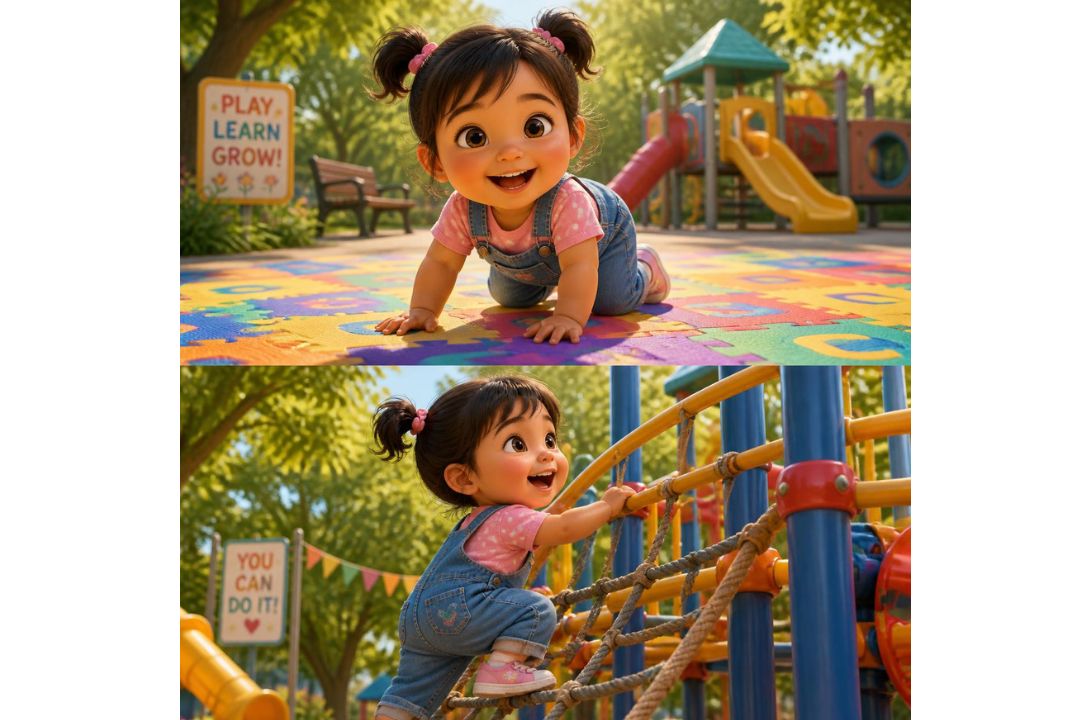
Crawling: More Important Than Many People Realise
Crawling is often seen as just another developmental milestone—but it’s actually a remarkable workout for the developing brain.
When children crawl, they:
- Use both sides of their body together
- Cross the midline
- Strengthen shoulders and core muscles
- Develop hand arches
- Build visual tracking
- Improve body awareness
- Coordinate opposite arm and leg movements
These skills later support handwriting, reading, dressing, sports and classroom learning.
Even older children benefit from crawling games and obstacle courses.
Climbing Builds More Than Muscles
Every climb is a problem-solving adventure.
Children constantly make decisions about:
- Where to place their hands
- Which foot to move next
- How much force to use
- How to maintain balance
- How to judge risk safely
Climbing develops:
- Core strength
- Shoulder stability
- Grip strength
- Motor planning
- Confidence
- Balance
- Spatial awareness
These same skills contribute to sitting upright at school, handwriting endurance and participating confidently in playground games.
Jumping, Running and Spinning
Children naturally seek movement because their brains need it.
Running, jumping, hopping and dancing all provide valuable vestibular and proprioceptive input that supports:
- Attention
- Coordination
- Endurance
- Emotional regulation
- Fitness
- Social participation
For many children, a few minutes of active movement before a learning task can significantly improve their ability to focus.
Movement Helps Children Learn
Research continues to show strong links between physical movement and cognitive development.
Movement supports learning by improving:
Attention
Movement helps “wake up” the brain and prepare it for learning.
Many children concentrate better after opportunities to move.
Memory
Physical activity strengthens neural pathways involved in storing and retrieving information.
Executive Functioning
Movement encourages:
- Planning
- Sequencing
- Organisation
- Flexible thinking
- Problem-solving
- Working memory
These are all essential skills for school success.
Emotional Regulation
Movement gives children opportunities to regulate their nervous system.
Activities involving climbing, swinging, pushing and pulling can help children feel calmer, more organised and ready to engage.
Fine Motor Skills Begin with Big Movements
It might seem surprising, but handwriting doesn’t begin with holding a pencil.
It begins with:
- Strong shoulders
- Stable core muscles
- Good posture
- Bilateral coordination
- Body awareness
- Balance
These larger movement skills create the foundation for developing precise finger control later.
That’s why we as Occupational Therapists often focus on whole-body movement before expecting children to master fine motor tasks.
Everyday Ways to Build Brains Through Movement
The good news is that children don’t need expensive equipment or structured exercise programs.
Some of the best opportunities happen naturally during everyday play.
Playground Adventures
- Climbing equipment
- Monkey bars
- Slides
- Swings
- Balance beams
Nature Play
- Climbing trees
- Walking on logs
- Exploring parks
- Hiking
- Collecting sticks and leaves
Backyard Fun
- Obstacle courses
- Ball games
- Trampolines (with appropriate supervision)
- Skipping
- Chalk hopscotch
Indoor Movement
- Pillow obstacle courses
- Dance parties
- Animal walks
- Yoga for kids
- Balloon volleyball
- Simon Says
Helping Around the House
Daily chores provide wonderful “heavy work” opportunities.
Children can:
- Carry groceries
- Push the vacuum
- Help with gardening
- Wash windows
- Move laundry baskets
- Stir cake mixture
- Pack shopping away
These activities strengthen muscles while supporting body awareness and independence.
Every Child’s Movement Needs Are Different
Some children constantly seek movement.
Others avoid climbing, running or swinging.
Neither is “right” or “wrong.”
Children have unique sensory profiles, developmental experiences and nervous systems.
Understanding why your child seeks or avoids movement is often the first step towards supporting their development.
How TTN Occupational Therapists Can Help
At The Therapy Network (TTN), our Occupational Therapists use movement as a powerful therapeutic tool to support children’s overall development.
We work collaboratively with families to understand each child’s strengths, challenges and individual sensory needs.
Our Occupational Therapists may:
- Assess gross and fine motor development
- Evaluate sensory processing and regulation
- Identify underlying movement challenges affecting learning
- Develop individualised therapy goals
- Create engaging, play-based movement programs
- Recommend strategies for home, school and community settings
- Build balance, coordination and motor planning skills
- Support emotional regulation through movement
- Help children develop confidence to participate in everyday activities
Every therapy session is designed to be purposeful, enjoyable and meaningful because children learn best when they’re actively engaged.
Movement Today Builds Success Tomorrow
Children don’t need to spend every minute sitting quietly to learn.
Sometimes, the best preparation for reading is climbing.
The best preparation for handwriting is crawling.
The best preparation for attention is running.
Every movement experience helps build stronger brains, more confident bodies and greater independence.
At The Therapy Network (TTN), we believe movement isn’t simply something children do between learning—movement is learning.
By giving children opportunities to move, explore and play every day, we’re helping them develop the foundations they’ll rely on for a lifetime.
Need Some Extra Support?
If your child appears unusually clumsy, avoids movement, struggles with balance or coordination, tires quickly during physical activities, or finds classroom tasks challenging, an Occupational Therapy assessment can help identify the underlying skills that may need support.
Our team at The Therapy Network (TTN) is passionate about helping children move with confidence so they can learn, grow and thrive.