

Sensory Processing Is Part of Every Child’s Day
From the moment a child wakes up, their brain is receiving sensory information.
They feel the temperature of the room, hear household sounds, notice the texture of their clothes, taste their breakfast and sense how their body is moving. Throughout the day, their nervous system continues to receive and organise information from both their body and the environment.
Sensory processing refers to how the brain receives, interprets and responds to this information. Children can be more sensitive to certain sensations, less aware of them or actively seek additional sensory experiences.
Sensory information comes from several different systems, including:
- Sight—light, colour, movement and visual detail
- Sound—voices, music, alarms and background noise
- Touch—clothing, physical contact and different textures
- Taste and smell—foods, perfumes and environmental smells
- Vestibular processing—balance, speed and movement
- Proprioception—information from muscles and joints about body position
- Interoception—internal body signals such as hunger, thirst, tiredness, pain and a racing heart
For many children, this information is processed without causing significant difficulty. For others, particular sensations can feel distracting, uncomfortable, unpredictable or overwhelming.
These experiences can have a significant influence on emotional wellbeing.
What Does Sensory Processing Have to Do With Mental Health?
Mental health is about more than the presence or absence of a diagnosis. It includes how a child feels, copes with challenges, connects with others and participates in everyday life.
A child’s sensory experiences can affect all of these areas.
When a child repeatedly encounters sensory experiences that feel intense or difficult to manage, their nervous system may remain in a heightened state of alert. They may spend much of the day anticipating uncomfortable noises, avoiding certain environments or using significant energy to cope.
Over time, this can contribute to:
- increased stress
- anxiety or worry
- irritability
- emotional exhaustion
- reduced confidence
- difficulty concentrating
- avoidance of activities
- challenges with sleep
- withdrawal from social situations
- a reduced sense of safety or control
Sensory sensitivities can increase stress and anxiety, while stress and anxiety can also make a child more alert to sensory information. This can create a cycle in which sensory experiences and emotional distress intensify one another.
The Sensory–Stress Cycle
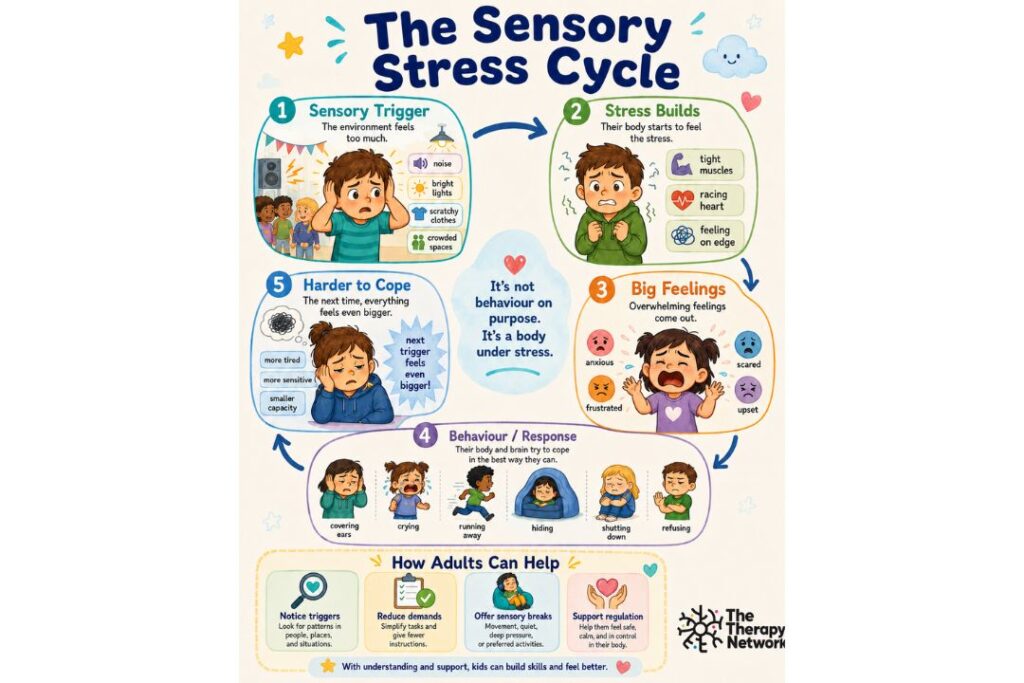
Imagine a child who is highly sensitive to noise.
At school, they may need to manage chairs scraping across the floor, students talking, bells ringing, hand dryers operating and sudden announcements over the speaker.
Even before a loud sound occurs, the child may begin worrying about when it will happen.
This anxiety can make their nervous system more alert. When a noise does occur, it may feel even more intense because the child is already tense and expecting something uncomfortable.
The cycle might look like this:
Sensory discomfort → increased stress → greater sensitivity → stronger emotional response → avoidance or distress
The child may begin refusing to enter the classroom, avoiding assemblies or becoming distressed before school.
From the outside, adults might see refusal or challenging behaviour. From the child’s perspective, they may be trying to protect themselves from an environment that feels unsafe or unpredictable.
Sensory Overload Can Look Like Anxiety
Sensory overload occurs when the brain receives more information than it can comfortably process.
A child experiencing overload may:
- cover their ears
- close their eyes
- hide or leave the area
- become tearful
- yell or push others away
- appear panicked
- become very quiet
- stop responding
- struggle to follow instructions
- repeatedly ask to go home
- refuse to enter particular environments
Sensory overload can lead to significant anxiety and overwhelm. Some children respond with an outward meltdown, while others experience a shutdown and become quiet, withdrawn or unable to respond.
These reactions are not necessarily deliberate choices. They may be signs that the child’s nervous system has reached its capacity.
Sensory Needs Can Affect Confidence and Self-Esteem
Children often notice when they respond differently from their peers.
A child may wonder why everyone else can tolerate the school bell, wear the required uniform, join the birthday party or eat in a noisy restaurant.
They might hear comments such as:
“You are being too sensitive.”
“It is not that loud.”
“Everyone else is managing.”
“You just need to try harder.”
Although these comments may be intended as encouragement, they can leave the child feeling misunderstood or ashamed.
Repeatedly struggling in everyday environments may affect a child’s confidence. They may begin to believe that they are difficult, incapable or failing at something that appears easy for others.
A more supportive message is:
“I believe that this feels uncomfortable for you.”
“Your body is telling us that it needs some support.”
“Let’s work out what might make this easier.”
Feeling understood does not remove every challenge, but it can protect a child’s sense of safety, connection and self-worth.
Avoidance Can Be a Form of Self-Protection
Children may avoid environments or activities that they associate with sensory discomfort.
This might include:
- school assemblies
- public toilets
- shopping centres
- sports stadiums
- birthday parties
- playgrounds
- haircuts
- dental appointments
- messy play
- particular clothing
- family mealtimes
- busy classrooms
Avoidance is sometimes mistaken for defiance, laziness or a lack of motivation.
However, the child may be remembering a previous experience of distress and trying to prevent it from happening again.
Avoidance can provide immediate relief, but it may also reduce opportunities for social connection, learning, independence and enjoyment. Sensory processing differences can create barriers to participation in education, play, leisure and social activities.
The goal is not to force a child to tolerate distress. Instead, adults can identify what is making the activity difficult and introduce adjustments that allow the child to participate more safely and successfully.
Sensory Seeking Can Support Emotional Regulation
Not all sensory needs involve avoiding sensations.
Some children seek additional sensory input because it helps their nervous system feel organised.
They may:
- jump, run or spin
- chew clothing or objects
- make repetitive sounds
- touch nearby objects
- crash into cushions
- seek firm hugs or pressure
- rock in their chair
- fidget with items
- pace around the room
These actions may help the child remain alert, release tension or manage strong emotions.
For example, a child might pace while talking about something worrying, chew on their sleeve during a difficult task or jump repeatedly after managing a busy school day.
Rather than automatically stopping sensory-seeking behaviour, adults can consider whether it is helping the child regulate and whether a safer or more suitable alternative is needed.
The Importance of Internal Body Signals
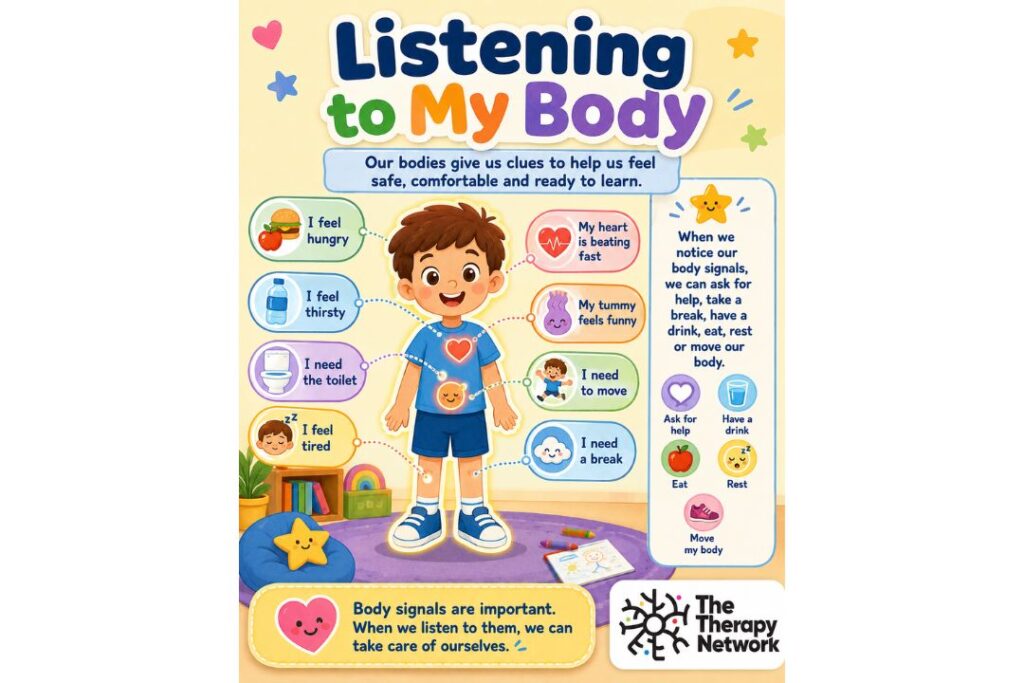
Interoception is the sensory system that helps us notice what is happening inside our bodies.
It allows us to recognise signals such as:
- hunger
- thirst
- tiredness
- pain
- needing the toilet
- changes in breathing
- muscle tension
- a racing heart
- feeling hot or cold
Body signals also provide important information about emotions.
A racing heart might be connected to worry or excitement. Tight muscles may be linked with anger or stress. A heavy, tired feeling might be associated with sadness or exhaustion.
Some children find these internal signals difficult to notice or interpret. They may not recognise that they are hungry, tired, worried or becoming overwhelmed until the sensation is very intense.
Adults may see what appears to be a sudden emotional reaction, but the child’s body may have been building towards distress for some time.
Helping children recognise body signals can support emotional awareness and make it easier for them to communicate what they need.
When Sensory Needs Affect Participation
A child can appear calm while using enormous amounts of energy to manage their environment.
They may hold themselves together throughout the school day and then become distressed after arriving home. This does not necessarily mean that the reaction was caused by a minor request at home.
It may reflect the accumulated effort of managing:
- classroom noise
- uncomfortable clothing
- busy transitions
- social expectations
- visual distractions
- unexpected touch
- strong smells
- the need to remain seated
- uncertainty about what will happen next
By the end of the day, the child may have little emotional energy remaining.
Sensory needs may affect participation in:
- learning
- friendships
- family routines
- self-care
- sleep
- community activities
- sport
- play
- eating and mealtimes
- unfamiliar experiences
Supporting mental wellbeing therefore involves considering not only the child’s coping skills, but also the demands of their environments and routines.
Sensory Differences Do Not Automatically Mean a Mental Health Condition
It is important to recognise that sensory processing differences and mental health conditions are not the same thing.
A child can have sensory needs without having anxiety, depression or another mental health diagnosis. Similarly, a child can experience mental health challenges that are not primarily related to sensory processing.
However, the two can interact.
Sensory discomfort may increase stress or worry, while anxiety can make sensory experiences feel more intense. Research involving autistic children and young people has also identified relationships between sensory hyperreactivity and some anxiety-related symptoms.
Understanding this connection can help families and professionals avoid treating sensory and emotional needs as completely separate issues.
How Adults Can Support Sensory and Emotional Wellbeing
Believe the Child’s Experience
A sensation that feels manageable to one person may feel painful or overwhelming to another.
The child’s experience is real, even when adults cannot see or feel the source of their discomfort.
Look for Patterns
Consider:
- When does the child become distressed?
- Which environments are most difficult?
- What sensory experiences occur beforehand?
- Does the response happen at a particular time of day?
- Is the child tired, hungry or already stressed?
- What helps them recover?
Identifying patterns can help adults provide support before the child becomes overwhelmed.
Reduce Unnecessary Sensory Demands
Helpful adjustments might include:
- lowering background noise
- reducing visual clutter
- offering comfortable clothing options
- providing access to a quieter space
- preparing the child for loud or unfamiliar experiences
- allowing movement during learning
- changing where the child sits
- offering breaks from busy environments
Build Predictability
Visual schedules, countdowns, preparation and clear routines can reduce uncertainty.
Predictability is particularly helpful when sensory experiences are difficult to control, because it gives the child a greater sense of safety and understanding.
Support Communication
Children can be taught ways to communicate sensory and emotional needs, such as:
- “It is too loud.”
- “I need space.”
- “Can I have a break?”
- “My body needs to move.”
- “I do not feel ready.”
- “Can you show me what will happen?”
Visual cards, feelings scales or body check-ins may be helpful when words are difficult to access.
How The Therapy Network’s Occupational Therapists Can Help
As Occupational therapists we consider the relationship between the child, their activities and their environments.
We may explore:
- sensory preferences and sensitivities
- emotional regulation
- body awareness
- daily routines
- sleep and fatigue
- attention and executive functioning
- participation at home, school and in the community
- environmental triggers
- the child’s strengths, interests and existing coping strategies
Support may involve:
- helping the child recognise body signals
- developing an individualised regulation plan
- adjusting environments and routines
- introducing visual supports
- identifying suitable movement or sensory opportunities
- supporting participation in challenging activities
- helping parents and educators recognise early signs of overload
- teaching more effective ways to communicate discomfort
- collaborating with other members of the child’s support team
We firmly believe we can play an important role in helping children build self-regulation skills and participate more successfully in everyday activities.
Sensory support should always be individualised. A strategy that helps one child may be distracting, uncomfortable or ineffective for another.
Supporting Sensory Needs Is Supporting Mental Wellbeing
Supporting a child’s sensory needs is not about removing every challenge or creating a world without noise, touch, movement or change.
It is about helping the child feel understood, building awareness of what their body needs and reducing barriers that prevent meaningful participation.
When children receive appropriate support, they may be better able to:
- feel safe in their environment
- recognise and communicate their needs
- recover from overwhelming experiences
- participate in learning and play
- connect with friends and family
- approach new experiences with greater confidence
- develop a more positive understanding of themselves
Sensory strategies are not a replacement for psychological or medical care when a child is experiencing significant mental health concerns. Instead, sensory-informed occupational therapy can form one part of a coordinated support approach.
At The Therapy Network, we look beyond what can be seen on the surface. We consider how a child experiences the world, how those experiences affect their emotions and what practical supports may help them participate.
Because when children feel comfortable, understood and supported in their bodies, they are better placed to connect, learn, play and thrive.