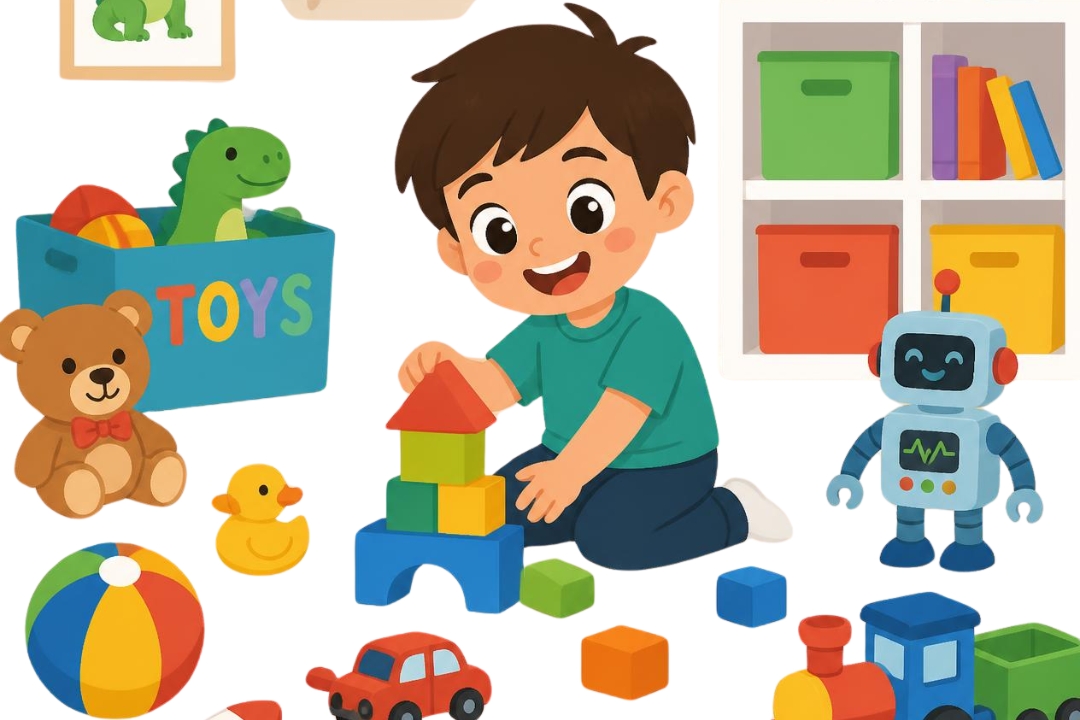

“Can you clean your room?”
For many adults, that sounds like a simple request.
But for a child, it might feel like this:
- Where do I start?
- What should I pick up first?
- How long will this take?
- What if I forget something?
- What if I can’t finish?
Suddenly, one small request becomes dozens of decisions.
It’s no wonder some children freeze, become upset or avoid the task altogether.
At The Therapy Network (TTN), occupational therapists often remind families that what appears to be “one task” is actually made up of many smaller thinking skills. When we break those tasks into manageable steps, children are far more likely to feel capable, confident and successful.
Why Big Tasks Feel So Overwhelming
Everyday activities often require much more than we realise.
Take the instruction:
“Get ready for school.”
To an adult, this is one task.
For a child, it may involve:
- Get out of bed.
- Use the bathroom.
- Brush teeth.
- Wash face.
- Get dressed.
- Pack school bag.
- Put homework inside.
- Fill drink bottle.
- Put on shoes.
- Find hat.
- Put lunch in bag.
- Remember jumper.
- Leave on time.
That’s more than a dozen separate tasks hidden inside one instruction.
Children with developing executive functioning skills often struggle to organise, prioritise and sequence these steps independently.
Understanding Cognitive Load
Cognitive load refers to the amount of mental effort our brain is using at any one time.
Every task places demands on our thinking.
When too many demands are placed on the brain at once, children may:
- Feel overwhelmed.
- Shut down.
- Become distracted.
- Avoid the task.
- Forget steps.
- Need repeated reminders.
- Become emotional or frustrated.
Reducing cognitive load doesn’t make children less capable—it makes success more achievable.
Executive Functioning Is Working Hard
Breaking tasks into smaller steps supports several executive functioning skills, including:
- Task initiation
- Working memory
- Planning
- Organisation
- Flexible thinking
- Sequencing
- Sustained attention
- Self-monitoring
Rather than expecting children to manage all of these skills at once, we can support them one step at a time.
What This Looks Like Across Different Ages
Young Children (3–5 years)
Young children benefit from:
- Picture routines.
- One-step instructions.
- Adult modelling.
- Predictable daily routines.
- Immediate praise.
For example:
Instead of:
“Get ready for bed.”
Try:
- Put your pyjamas on.
- Great! Now brush your teeth.
- Fantastic! Next, choose a story.
Primary School (5–12 years)
School-aged children often need support to:
- Organise homework.
- Complete classroom tasks.
- Pack school bags.
- Manage morning routines.
- Complete household jobs.
Visual checklists help reduce the mental effort required to remember every step.
Adolescents (12–18 years)
As teenagers become more independent, the tasks become more complex.
Examples include:
- Completing assignments.
- Studying for exams.
- Preparing for part-time work.
- Managing sports equipment.
- Organising school projects.
- Preparing for social activities.
Breaking large projects into weekly or daily goals makes them feel much more achievable.
Young Adults (18–25 years)
Executive functioning continues developing into the mid-twenties.
Young adults may benefit from breaking down tasks such as:
- Applying for jobs.
- Completing university assignments.
- Paying bills.
- Grocery shopping.
- Cooking meals.
- Managing appointments.
- Household cleaning.
Adults use planners, calendars and reminder apps every day—it makes sense to teach young people these same strategies.
Why Visual Supports Work
Children with executive functioning challenges often struggle to hold multiple pieces of information in their working memory.
Visual supports reduce this mental load because the information stays visible.
Examples include:
- Picture schedules.
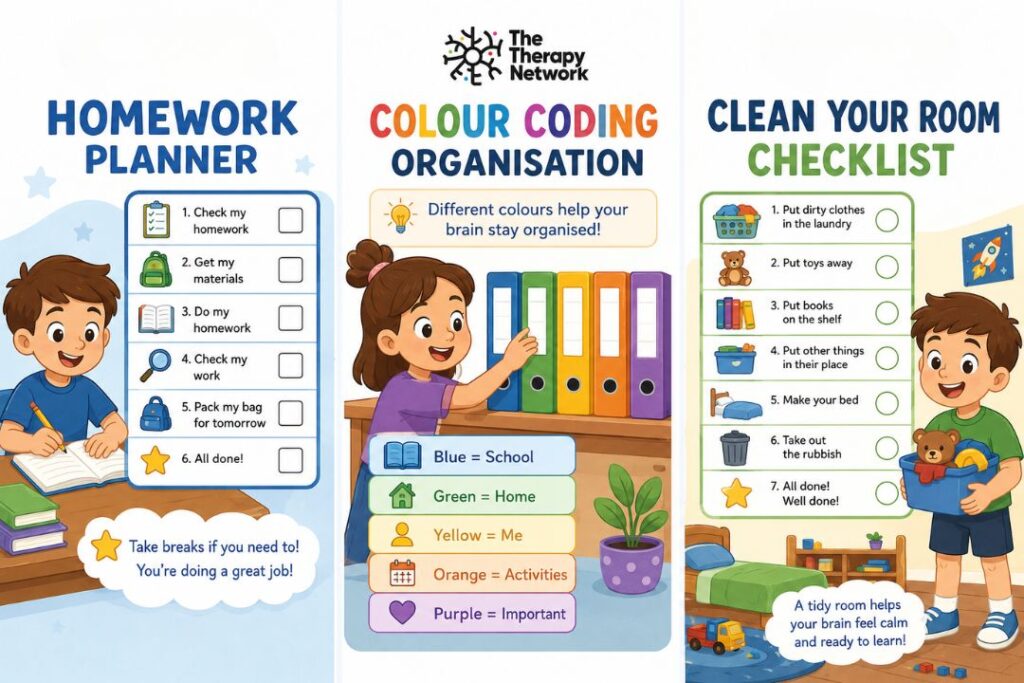
- Written checklists.
- Whiteboards.
- Calendars.
- Sticky notes.
- Colour-coded folders.
- Timetables.
- Visual timers.
- “First–Then” boards.
- Step-by-step photo guides.
Instead of remembering everything, children can simply refer back to the visual support.
Practical Strategies Families Can Use
Break One Big Task Into Small Wins
Instead of:
“Clean your room.”
Try:
- Put dirty clothes in the basket.
- Make the bed.
- Put books on the shelf.
- Pack toys into the toy box.
- Put rubbish in the bin.
Each completed step builds momentum and confidence.
Use Checklists
Children love ticking things off.
A checklist helps them:
- Stay organised.
- Know what’s next.
- Experience success.
- Work more independently.
As children become more confident, they can begin creating their own checklists.
Start With the First Step
Sometimes children don’t need help with the whole task—they just need help getting started.
Instead of asking:
“Do your homework.”
Try:
“Let’s open your homework folder together.”
The first step often feels like the biggest hurdle.
Make Expectations Clear
Children are more likely to begin when they know:
- What to do.
- How much to complete.
- How long it will take.
- When the task is finished.
Avoid vague instructions where possible.
Build Routines
When tasks happen in the same order every day, they gradually become habits.
For example:
Morning routine:
- Get dressed.
- Eat breakfast.
- Brush teeth.
- Pack lunch.
- Put on shoes.
The brain no longer has to work out what comes next.
Celebrate Progress, Not Just Completion
Children are more motivated when effort is recognised.
Instead of waiting until everything is finished, acknowledge each step:
“You packed your school bag independently today.”
“You remembered your lunchbox without a reminder.”
“You started your homework straight away.”
Small successes build long-term confidence.
How Occupational Therapy Can Help
Occupational therapists work with children, adolescents and young adults to identify which executive functioning skills are making tasks feel difficult.
Support may include:
Executive Functioning Intervention
Building skills such as:
- Planning.
- Organisation.
- Sequencing.
- Working memory.
- Time management.
- Self-monitoring.
Individualised Visual Supports
Occupational therapists design supports that match each person’s age, goals and learning style.
Examples include:
- Morning routine charts.
- Homework planners.
- School packing lists.
- Visual meal preparation guides.
- Independent living checklists.
Environmental Modifications
Sometimes changing the environment makes tasks easier.
Examples include:
- Labelled storage.
- Colour coding.
- Organised workspaces.
- Reduced distractions.
- Clearly defined activity areas.
Parent and School Coaching
Children are most successful when the same strategies are used consistently across home, school and community settings.
Occupational therapists work collaboratively with families and educators to develop realistic supports that promote independence.
Supporting Independence Without Doing Everything
One of the biggest concerns families have is:
“If I keep helping, won’t my child become dependent?”
In reality, good supports are designed to fade over time.
Initially, a child may need:
- Adult guidance.
- Visual prompts.
- Verbal reminders.
As executive functioning skills develop, these supports can gradually be reduced.
The goal isn’t to do the task for the child.
It’s to provide just enough support so they can eventually do it for themselves.
Final Thoughts
When children become overwhelmed by everyday tasks, it’s rarely because they don’t want to be independent.
Often, their brains are trying to manage too many steps at once.
Breaking large tasks into smaller, achievable pieces reduces cognitive load, supports executive functioning and creates opportunities for success.
At The Therapy Network (TTN), we believe that independence is built one step at a time. By using practical strategies, visual supports and strengths-based occupational therapy, we help children, adolescents and young adults develop the confidence and skills to manage increasingly complex tasks at home, school, work and in the community.
Sometimes the smallest step is the one that makes the biggest difference.