
“My pencil broke!”
“Someone sat in my chair!”
“I can’t find my favourite jumper!”
For many children, these everyday situations can feel like major disasters.
As adults, we often know these problems have simple solutions. We grab another pencil, find another chair, or choose a different jumper.
But for children, especially those still developing executive functioning skills, these moments can feel overwhelming because they haven’t yet learned how to judge the size of a problem—or how to make a plan to solve it.
At The Therapy Network (TTN), helping children develop problem-solving skills is an important part of occupational therapy. When children learn to pause, think, and choose a solution, they become more confident, independent, and resilient.
What Are Executive Functioning Skills?
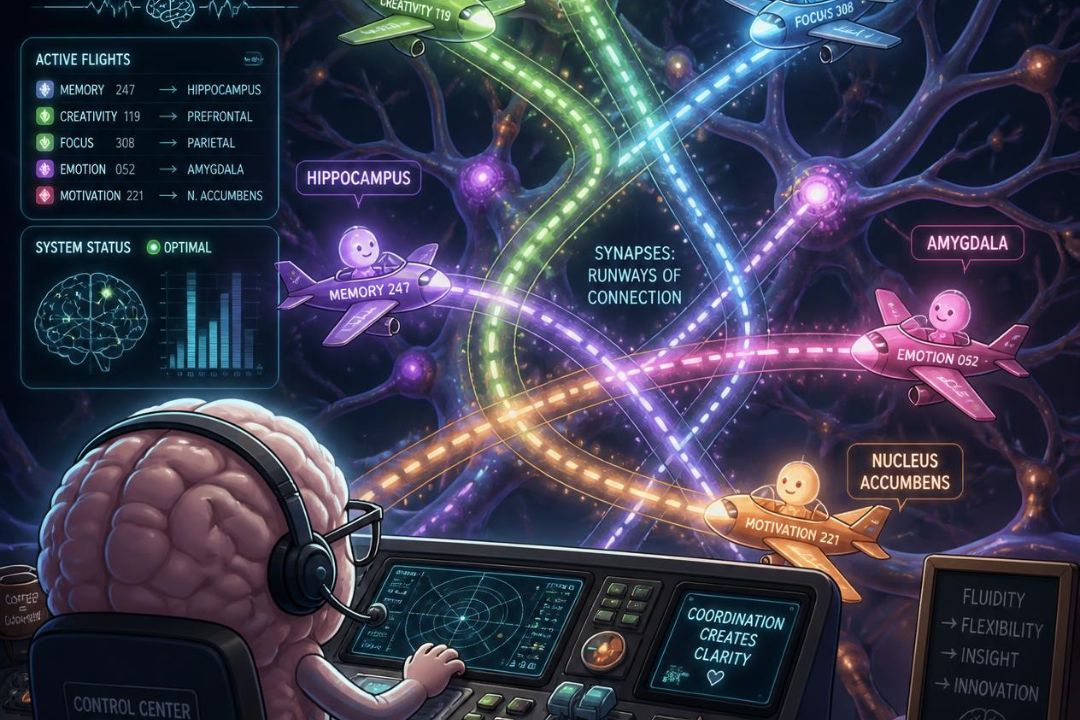
Executive functioning skills are the brain’s “management system.”
They help children:
- Plan ahead.
- Organise information.
- Think flexibly.
- Control impulses.
- Manage emotions.
- Shift between tasks.
- Remember instructions.
- Solve problems.
These skills continue developing throughout childhood and adolescence, which means problem-solving is something children learn—not something they automatically know how to do.
Why Do Some Children Feel Overwhelmed?
When something unexpected happens, children need to quickly answer several questions:
- How big is this problem?
- How do I feel about it?
- What are my options?
- What should I do first?
- Will I need help?
For some children, particularly those with differences in executive functioning, ADHD, autism, anxiety, or emotional regulation, this process is much harder.
Instead of thinking through the problem, their brain can become flooded with emotion.
When this happens, even a very small problem can feel enormous.
The Difference Between Big and Small Problems
One of the most valuable skills children can learn is recognising that not every problem is the same size.
For example:
Small Problems
- Your pencil snaps.
- You forgot your hat.
- Someone else is using your favourite swing.
- Your socks don’t match.
- You lose a game.
These problems usually have simple solutions and can often be solved independently or with minimal help.
Medium Problems
- You forget your homework.
- You have an argument with a friend.
- Your lunch is left at home.
- You miss the bus.
These situations may require help from an adult or a little more planning.
Big Problems
- Someone is hurt.
- You feel unsafe.
- A family emergency occurs.
- Someone is being bullied.
- There is a fire or other emergency.
These problems always require help from a trusted adult.
Helping children understand these differences allows them to respond more appropriately instead of feeling overwhelmed by every challenge.
Teaching Children to Ask: “How Big Is My Problem?”
A simple question can make a big difference:
“How big is this problem?”
When children pause before reacting, they begin activating the thinking part of the brain rather than remaining stuck in the emotional part.
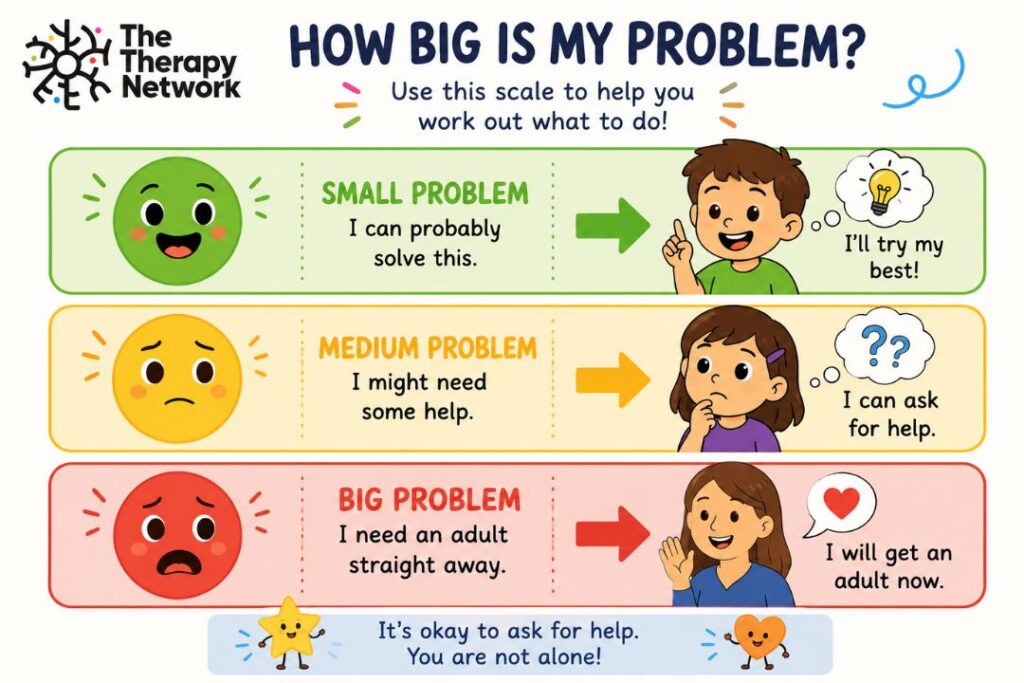
Some families find it helpful to use a visual scale, such as:
🟢 Small Problem – I can probably solve this.
🟡 Medium Problem – I might need some help.
🔴 Big Problem – I need an adult straight away.
Visual supports make abstract concepts much easier for young children to understand.
Then Ask: “What’s My Game Plan?”
Once children recognise the size of the problem, they can begin developing a solution.
Encourage them to think through questions such as:
- What happened?
- What is one thing I could try?
- Who could help if I need it?
- Is there another way to solve this?
- What can I learn from this?
This shifts their focus from the problem to the solution.
Problem Solving Is Like Building a Toolbox
Children aren’t born knowing how to solve problems.
Every new strategy becomes another tool they can use.
Some tools might include:
- Taking three deep breaths.
- Asking for help.
- Trying a different idea.
- Taking a short movement break.
- Using positive self-talk.
- Thinking of two or three possible solutions.
- Checking whether the problem will still matter tomorrow.
The more opportunities children have to practise these strategies, the more automatic they become.
How Families Can Practise at Home
Problem-solving doesn’t need to wait until something goes wrong.
Families can build these skills through everyday activities such as:
- Reading books and discussing how characters solved problems.
- Asking, “What else could they have done?”
- Playing board games that involve planning and flexible thinking.
- Completing puzzles together.
- Cooking and solving small challenges as they arise.
- Building obstacle courses and encouraging children to adapt when something changes.
- Talking about problems you solved during your own day.
Children learn best by watching adults model calm, flexible thinking.
It’s Okay to Feel Big Feelings
Helping children solve problems doesn’t mean telling them their feelings aren’t important.
A broken toy might genuinely feel devastating.
The goal is to acknowledge the feeling while helping children discover that they are capable of finding a solution.
You might say:
“I can see you’re really disappointed. Let’s work out how big this problem is and think about what we can do next.”
This teaches children that feelings are valid—but they don’t have to stay stuck in them.
How Occupational Therapy Can Help
Occupational therapists support children to develop the executive functioning skills needed for everyday life.
This may include helping children:
- Develop flexible thinking.
- Improve emotional regulation.
- Build planning and organisation skills.
- Learn problem-solving strategies.
- Increase independence.
- Develop confidence when facing challenges.
- Reduce anxiety around unexpected situations.
Through play-based activities, real-life situations, and collaboration with families and schools, occupational therapists help children build practical skills they can use every day.
Helping Children Become Confident Problem Solvers
Life will always present challenges—both big and small.
The goal isn’t to remove every obstacle from a child’s path.
It’s to give them the confidence, strategies, and resilience to work through those challenges independently.
At The Therapy Network (TTN), we help children strengthen the executive functioning skills that support flexible thinking, emotional regulation, and confident problem solving—because every challenge is an opportunity to learn, grow, and discover just how capable they really are.