
Life After School Is a Significant Transition
Finishing school is an exciting milestone, but it can also feel uncertain.
For many years, school provides structure, predictable routines and regular support from teachers, family members and other professionals. Once school ends, young adults may need to navigate a very different world involving further education, employment, appointments, transport, household responsibilities and community activities.
Some young people feel ready for this change. Others may need more time, explicit teaching and practical opportunities to build the skills required for adult life.
At The Therapy Network (TTN), our occupational therapists look beyond academic achievement when supporting transition planning.
We consider questions such as:
- Can the young person manage their morning routine?
- Do they know how to travel to familiar places?
- Can they organise appointments and responsibilities?
- Are they able to communicate when they need help?
- Can they manage money for everyday purchases?
- What type of work environment suits their strengths?
- What support will help them participate safely and confidently?
Preparing for adulthood is not about reaching complete independence in every area. It is about helping each young person build the skills, systems and supports they need to live a meaningful life.
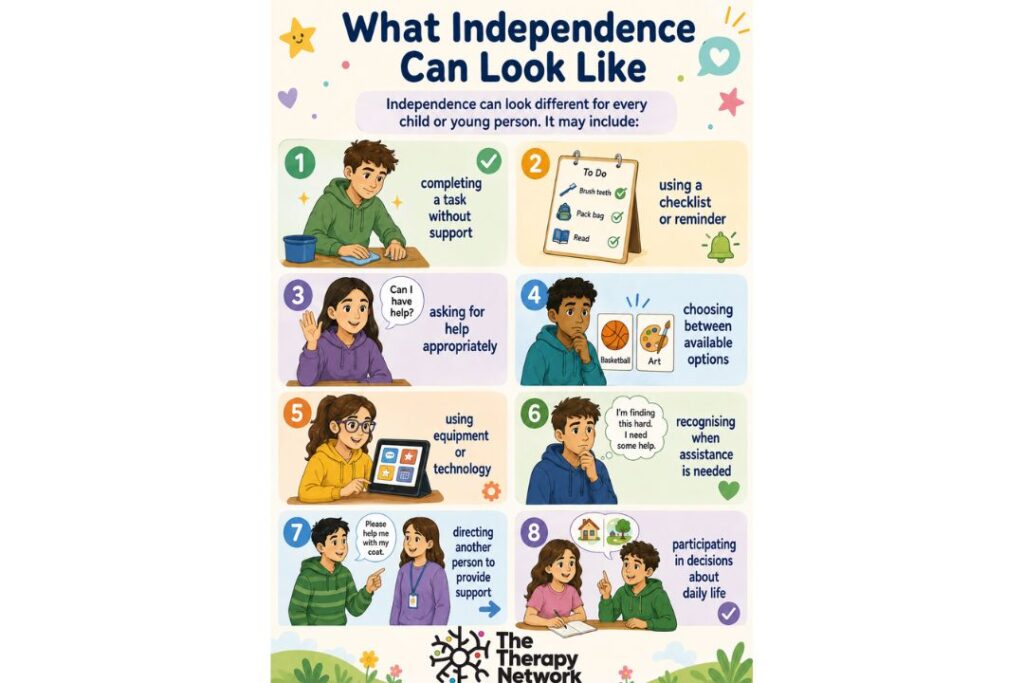
What Does Independence Really Mean?
Independence is often misunderstood as doing everything alone.
In reality, independence can include:
- completing a task without support
- using a checklist or reminder
- asking for help appropriately
- choosing between available options
- using equipment or technology
- recognising when assistance is needed
- directing another person to provide support
- participating in decisions about daily life
A young adult who uses a visual schedule, phone reminders or support from another person can still be actively involved in managing their own life.
The goal is not to remove every support. It is to make sure the support promotes participation, choice and increasing responsibility.
Start With the Young Person’s Goals
Transition planning should begin with the young person.
Adults may have important concerns about safety, work or daily living, but the young person’s interests and priorities provide the strongest foundation for meaningful planning.
They may want to:
- get a part-time job
- attend TAFE or university
- learn to travel independently
- join a gym or sporting club
- spend more time with friends
- move towards living away from home
- learn to cook
- manage their own money
- volunteer in the community
- develop greater privacy and control over their routines
Young people are more likely to engage in skill development when the goal feels relevant to their life.
For example, learning to use public transport may become more motivating when it allows the young person to travel to work, meet a friend or attend a preferred activity.
Building Independence in Everyday Life
Daily living skills form the foundation of adult participation.
A young person may have strong academic knowledge but still find it difficult to manage the practical demands of everyday life.
Personal Care and Health Routines
Young adults may need to manage tasks such as:
- showering and grooming
- choosing appropriate clothing
- completing dental care
- managing menstruation
- preparing medication
- recognising illness or discomfort
- attending health appointments
- communicating with healthcare professionals
- maintaining sleep routines
These activities involve more than knowing how to complete each task.
They may require:
- sequencing
- remembering
- time awareness
- sensory tolerance
- motor coordination
- problem-solving
- recognising internal body signals
- understanding social expectations
As occupational therapists we may help break these routines into manageable steps, develop visual supports, recommend equipment or identify environmental changes that promote success.
Managing a Morning Routine
Getting ready for work, study or community activities may involve:
- Waking at the required time.
- Getting out of bed.
- Completing personal care.
- Choosing appropriate clothing.
- Preparing breakfast.
- Packing necessary belongings.
- Checking transport arrangements.
- Leaving home on time.
A young person may know how to complete each individual activity but struggle to organise the entire routine.
Helpful strategies might include:
- preparing clothing and bags the night before
- using a written or visual checklist
- setting several staged alarms
- creating a consistent order of tasks
- reducing unnecessary morning decisions
- using a timer to support pacing
- placing important items near the door
Practising the complete routine is often more useful than practising each skill separately.
Cooking and Meal Preparation
Food preparation supports independence, health, budgeting and participation in family life.
Skills may include:
- choosing a meal
- writing a shopping list
- locating ingredients
- using kitchen equipment safely
- following a recipe
- managing several steps at once
- recognising when food is cooked
- cleaning the kitchen afterwards
- storing leftovers safely
A young person might begin by preparing one familiar snack or meal before progressing to more complex tasks.
Visual recipes, pre-measured ingredients, timers, adapted equipment and simplified meal plans can make cooking more manageable.
The goal should be functional success rather than preparing elaborate meals.
Household Responsibilities
Young adults may also need support to learn:
- laundry
- changing bed linen
- cleaning
- washing dishes
- taking out rubbish
- organising personal spaces
- caring for belongings
- managing household safety
- completing basic shopping
These responsibilities can be introduced gradually and linked to predictable routines.
For example:
- laundry every Saturday morning
- checking rubbish bins after dinner
- changing bed linen on the first Sunday of the month
- completing a ten-minute room reset each evening
Clear routines reduce the need to remember each task from scratch.
Money Management
Managing money is an important adult responsibility.
Young adults may need to develop skills in:
- recognising the value of money
- paying for items
- checking change
- using a bank card
- understanding account balances
- budgeting
- comparing prices
- identifying essential and optional expenses
- recognising scams
- managing subscriptions
- saving towards a goal
These skills are best taught through real-life practice.
A young person might start by purchasing one item, managing a weekly spending amount or comparing the prices of familiar products.
Digital banking can support independence, but it may also introduce risks. Young people may need explicit teaching about passwords, online safety, recurring payments and suspicious messages.
Supporting Community Participation
Community participation involves accessing the places, relationships and activities that make life meaningful.
This may include:
- shopping
- using public transport
- attending appointments
- joining social or recreational activities
- accessing libraries or community centres
- participating in sport
- volunteering
- attending faith or cultural activities
- meeting friends
- using community services
Being able to enter the community is not the same as feeling confident, included or able to participate.
Travel and Transport Skills
Transport is often central to adult independence.
Young adults may need to learn how to:
- plan a route
- read a timetable
- use a transport card
- recognise the correct stop
- manage delays
- cross roads safely
- ask for directions
- contact someone when plans change
- use a rideshare or taxi safely
- carry necessary identification and emergency information
Travel training should begin with familiar, meaningful routes.
For example:
- travelling from home to a local shop
- taking the bus to TAFE
- walking from a train station to work
- travelling to a regular community activity
The route can be practised in stages, with support gradually reduced as the young person becomes more confident.
A backup plan is also important.
The young person should know what to do if:
- the bus does not arrive
- they miss their stop
- their phone battery is low
- the route changes
- they feel unsafe
- they become overwhelmed
Independent travel involves both routine skill and problem-solving.
Navigating Community Environments
Community spaces can involve sensory, social and organisational demands.
A shopping centre may require a young person to manage:
- crowds
- noise
- bright lighting
- waiting
- locating a shop
- speaking with staff
- paying for items
- carrying belongings
- managing unexpected changes
Occupational therapists can help identify which parts of the activity are difficult and introduce practical supports.
These might include:
- visiting during quieter times
- using a written shopping list
- planning the route in advance
- wearing hearing protection where appropriate
- using a phone map
- taking planned regulation breaks
- rehearsing common conversations
- carrying an emergency contact card
The purpose is not simply to tolerate the environment. It is to participate in a way that feels safe and manageable.
Social Participation and Belonging
Leaving school can change a young person’s social world.
School may have provided regular contact with peers, structured activities and familiar adults. After graduation, maintaining friendships or meeting new people may require more planning and initiative.
Young adults may benefit from support to:
- contact friends
- organise social plans
- join a group
- manage conversations
- understand boundaries
- resolve disagreements
- recognise safe and unsafe relationships
- manage online communication
- cope with changes to plans
- balance social time with recovery needs
Community participation should reflect the young person’s interests.
A young adult may prefer:
- gaming groups
- art classes
- sport
- animal-related volunteering
- music activities
- fitness groups
- library programs
- cultural groups
- special-interest clubs
Meaningful participation is not about forcing a young person into activities considered socially typical. It is about helping them find places where they feel interested, comfortable and connected.
Safety and Self-Advocacy
Community independence also involves recognising risks and communicating needs.
A young person may need to learn how to:
- identify trusted people
- recognise uncomfortable situations
- say no
- leave an unsafe environment
- seek help
- carry important information
- communicate medical or sensory needs
- report bullying, exploitation or harassment
- understand privacy
- protect personal information
- contact emergency services
Self-advocacy is a key adult skill.
A young person may need to communicate:
- “I need more time to process that.”
- “Can you write that information down?”
- “This environment is too loud for me.”
- “I do not understand what you are asking.”
- “I need to contact my support person.”
- “I am not comfortable with that.”
- “Can you show me how to do the first step?”
Knowing how to ask for support can increase independence rather than reduce it.
Developing Employment Readiness
Employment readiness involves much more than writing a résumé or attending an interview.
A young person also needs to manage the everyday routines, communication and expectations associated with work.
Understanding Strengths and Work Preferences
The first step is identifying the young person’s:
- interests
- strengths
- preferred environments
- communication style
- sensory needs
- support needs
- work pace
- physical capacity
- ability to manage change
- preferred level of social interaction
One young person may thrive in a busy, social workplace. Another may perform best in a quiet environment with predictable tasks and clear instructions.
Employment planning should focus on finding a good match between the person and the role.
A job that aligns with the young person’s strengths is more likely to support confidence, learning and long-term participation.
Foundational Work Habits
Employment commonly requires the ability to:
- arrive on time
- follow a schedule
- wear suitable clothing
- bring necessary equipment
- follow instructions
- begin tasks
- remain engaged
- manage breaks
- ask questions
- accept feedback
- communicate with supervisors
- work alongside others
- adapt when tasks change
- recognise when a task is complete
These skills can be practised through:
- household responsibilities
- school-based work experience
- volunteering
- community programs
- part-time employment
- structured practice tasks
The skill should be taught in the context where it will be used whenever possible.
Time Management for Work
A work shift may require the young person to:
- wake at the correct time
- prepare food
- dress appropriately
- travel to work
- arrive before the shift begins
- manage break times
- complete tasks within expected timeframes
- travel home safely
External supports might include:
- calendar reminders
- travel alerts
- a shift checklist
- staged alarms
- a visual task sequence
- written break times
- a weekly planning routine
These tools are used by many working adults and should not be viewed as a failure of independence.
Following Instructions
Workplace instructions may be delivered quickly, verbally or while other activity is happening.
A young person may benefit from:
- written instructions
- a task checklist
- visual examples
- one instruction at a time
- demonstration
- repetition
- an opportunity to practise
- a consistent contact person
- clarification about how to ask questions
A useful self-advocacy statement might be:
“Could you show me the task once and then write down the main steps?”
This allows the young person to complete the task more independently after the initial support.
Workplace Communication
Young adults may need support to understand:
- how to greet colleagues
- when to ask for help
- how to report a problem
- how to receive feedback
- appropriate workplace topics
- privacy and confidentiality
- how to communicate an absence
- who to contact if they are late
- how to request an adjustment
- how to respond to conflict
Role-play can be helpful, but practice in real or simulated work environments is often more meaningful.
Managing Sensory and Emotional Demands
Managing Sensory and Emotional Demands
Workplaces can involve:
- noise
- uniforms
- bright lighting
- strong smells
- physical contact
- unpredictable customers
- long periods of standing
- rapid transitions
- performance pressure
A young person may need strategies such as:
- planned movement or quiet breaks
- a predictable workspace
- hearing protection where safe and appropriate
- clear task expectations
- access to water
- gradual increases in shift length
- a consistent routine
- preparation for changes
- a plan for managing overwhelm
The aim is to help the young person maintain participation without using all of their energy simply to cope.
Preparing for Interviews
Interview preparation may include:
- learning about the role
- planning transport
- choosing suitable clothing
- practising common questions
- preparing examples of strengths
- deciding whether and how to discuss support needs
- preparing questions for the employer
- organising documents
- planning what to do if anxiety increases
Some young people may communicate their strengths more effectively through a work trial, portfolio or practical demonstration than through a traditional interview.
Understanding Workplace Rights and Responsibilities
Young adults should gradually learn about:
- workplace expectations
- pay and payslips
- hours and breaks
- safety procedures
- respectful behaviour
- discrimination
- reasonable adjustments
- harassment
- who to speak with about concerns
This information helps young people recognise both their responsibilities and their right to a safe, accessible workplace.
The Role of Occupational Therapy in Transition Planning
As Occupational therapists we support people to participate in the activities that give daily life structure, meaning and purpose.
For young adults, these activities may involve:
- self-care
- home responsibilities
- further education
- work
- transport
- money management
- social relationships
- community participation
- leisure
- health management
An OT can help identify the gap between what a young person wants or needs to do and the skills or supports currently available.
Assessing Functional Skills
As occupational therapist we may explore:
- daily living skills
- executive functioning
- sensory processing
- communication and self-advocacy
- motor coordination
- emotional regulation
- community safety
- travel skills
- social participation
- work habits
- environmental barriers
- fatigue
- the young person’s goals and preferences
Assessment should consider how the young person functions in real environments—not only what they can demonstrate in a clinic.
Breaking Goals Into Achievable Steps
A broad goal such as “become independent” is difficult to practise.
As an OT we may help turn it into specific steps, such as:
- prepare one breakfast independently
- use a checklist to pack for work
- travel one familiar bus route
- purchase an item using a bank card
- complete one household responsibility each week
- arrive at work experience on time
- contact a supervisor when running late
Specific goals make progress easier to recognise and support.
Practising Skills in Real Contexts
Skills often need to be practised in the places where they will be used.
Occupational therapy might include:
- cooking in the home
- practising shopping
- learning a transport route
- attending a community venue
- completing workplace tasks
- establishing a morning routine
- trialling planning tools
- practising communication in real situations
Real-life practice allows the young person and us as the therapist to identify barriers that may not be obvious during discussion alone.
Recommending Tools and Environmental Supports
As occupational therapists we may recommend:
- visual schedules
- checklists
- reminder systems
- adapted kitchen equipment
- organisational tools
- phone applications
- sensory supports
- travel aids
- workplace adjustments
- task modifications
- emergency plans
The best support is one that the young person understands, accepts and can use consistently.
Building Confidence Through Repetition
Confidence usually develops after a young person has had repeated opportunities to succeed.
They may need to practise a route, routine or workplace task several times before it feels familiar.
Support can then be reduced gradually.
For example:
- The young person completes the task with direct support.
- They complete it using a checklist and occasional prompts.
- Support is available nearby but not immediately provided.
- The young person completes the task independently and knows how to seek help if needed.
Progress should be paced according to the individual—not based on age alone.
Transition Planning Should Begin Before School Ends
Skills for adult life cannot be developed during the final weeks of school.
Preparation should begin early enough for the young person to:
- explore interests
- practise routines
- make mistakes safely
- try different supports
- participate in work experience
- build travel skills
- learn to manage responsibilities
- develop self-awareness
- contribute to decisions about their future
Transition planning may involve collaboration between:
- the young person
- family members
- school staff
- occupational therapists
- support coordinators
- employment services
- community organisations
- other allied health professionals
Everyone should work towards clear, meaningful goals that reflect the young person’s priorities.
Progress Will Look Different for Every Young Person
Success after school does not look the same for everyone.
For one young adult, progress may mean beginning university and travelling independently.
For another, it may mean volunteering one morning each week, learning to prepare lunch and participating in a local community program.
Progress might include:
- completing part of a routine independently
- using public transport with a support person
- asking a supervisor for clarification
- managing a short work shift
- joining a community group
- preparing a shopping list
- using a calendar reminder
- making an informed choice
- recognising when help is needed
These achievements build participation, confidence and autonomy.
Building a Life With Meaning and Choice
Preparing for life after school is not only about productivity.
Young adults also need opportunities for:
- rest
- relationships
- enjoyment
- creativity
- belonging
- choice
- contribution
- personal growth
A meaningful adult life includes much more than employment or independent living.
At The Therapy Network, as occupational therapists we support young people to develop practical skills that reflect their goals, strengths and support needs.
By gradually building independence, community participation and employment readiness, we can help young adults move beyond the school gate with greater confidence and a clearer sense of what comes next.
Because the aim is not simply to prepare a young person to leave school.
It is to help them build a life in which they can participate, contribute, make choices and continue to grow.